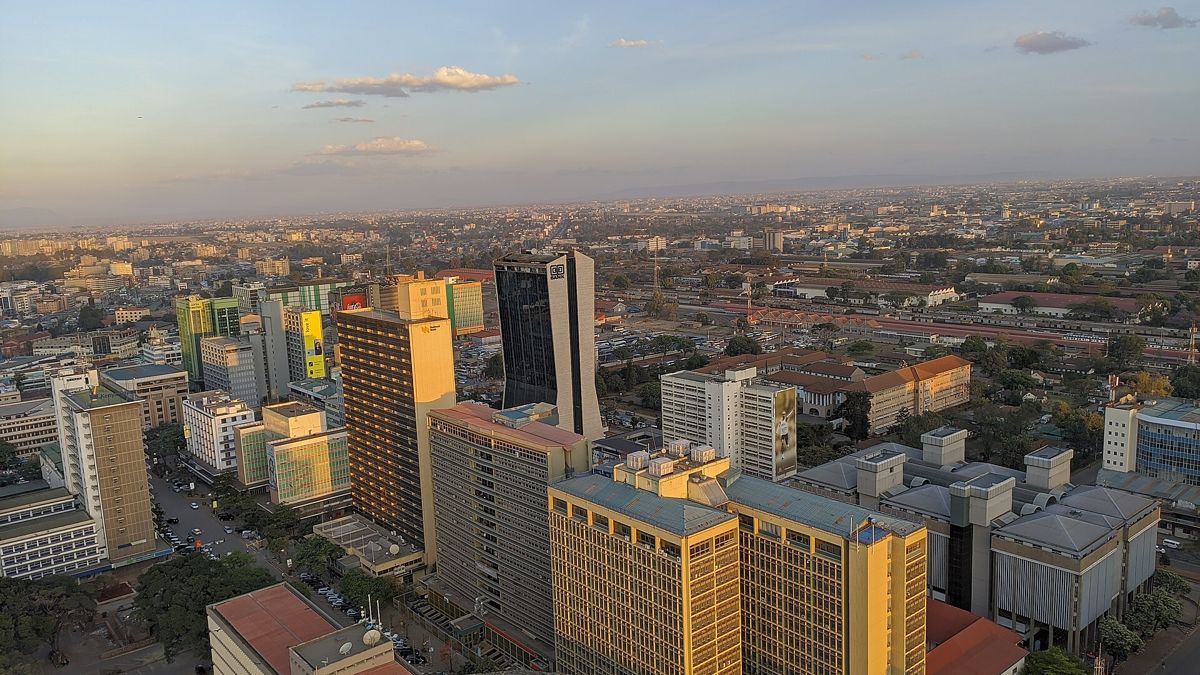
Kenyan households face a tougher cost-of-living year even if growth holds up, the International Monetary Fund said in its October 2026 World Economic Outlook, projecting inflation of 6.0 per cent in 2026 after 4.1 per cent in 2025.
The Fund’s report, titled Resilience Under Strain, Urgent Choices, puts Kenya’s GDP growth at 4.5 per cent this year and 4.7 per cent in 2027, roughly in line with the 4.6 per cent estimated for 2025. Inflation is seen easing to 5.0 per cent in 2027 after the 2026 climb.
Wider external gap
At the same time, the current account deficit is forecast to widen from 2.8 per cent of GDP to 4.5 per cent this year as fuel and food import bills rise. Kenya imports all of its fuel and does not earn an oil windfall when crude spikes — unlike Nigeria, which the Fund projects will run a current account surplus of about 7.0 per cent of GDP.
Global oil prices are expected to average $95.74 a barrel in 2026, up from $67.74 in 2025, The Kenya Times reported from the outlook. Global food prices are projected to rise 5.0 per cent. The Fund links much of the energy shock to Middle East disruptions earlier this year, when shipments through the Strait of Hormuz nearly stalled and crude briefly touched $126 a barrel in late March. Refined fuel prices remain between 70 and 95 per cent above pre-war levels in the Fund’s assessment, keeping diesel and petrol elevated even after crude pulled back from its peak.
Poorer households hit hardest
Lower-income households in the median low-income developing country spend about 80 per cent of consumption on food, transport and energy, against roughly 70 per cent for wealthier households, the IMF said. A 6 per cent national inflation rate can therefore understate the squeeze on families already living on essentials.
“Energy-importing economies outside the technology value chain face the most difficult outlook,” the Fund stated, according to The Kenya Times. Its policy advice favours targeted cash transfers over broad price caps or fuel tax relief, noting that blanket measures can cost three to 22 times as much as directed support for comparable protection. It also urges governments to build digital payment and national registry systems that can deliver help quickly when the next shock arrives.
Sub-Saharan Africa as a whole is still expected to expand by 4.5 per cent in both 2026 and 2027, the Fund said, but oil-importing economies in the region remain more exposed to food and energy prices. For Nairobi policymakers, the message is growth without comfort: the expansion track is intact, but a wider external deficit, dearer imports and 6 per cent inflation leave little room for fiscal or monetary missteps as December’s Article IV mission approaches.
Sources: Tuko | The Kenya Times
Photo: Lebu Ayiga / Wikimedia Commons (CC BY-SA 4.0)