

Updated 25 October 2026
Quick answer: to import a car from Japan to Kenya you choose a car first registered in 2019 or later (the KEBS 8-year rule for 2026), pay the exporter, let it pass a roadworthiness inspection in Japan, ship it to Mombasa, have a KRA-licensed clearing agent lodge the entry and pay the taxes, then register it with NTSA on eCitizen. KRA taxes are worked out from the car’s CRSP, not from what you paid. Check them first with our car import duty calculator.
In this guide
- Step 1: Check the Car Is Allowed In
- Step 2: Price the Taxes Before You Choose
- Step 3: Pick a Seller and Pay Safely
- Step 4: Pre-Shipment Inspection in Japan
- Step 5: Shipping to Mombasa
- Step 6: Hire a Licensed Clearing Agent
- Step 7: Port Charges and Release
- Step 8: Register With NTSA
- How Much Does It Cost in Total?
- Common Mistakes
Step 1: Check the Car Is Allowed In
Kenya’s standard for used road vehicles, KS 1515:2000, sets two hard limits. The car must be right-hand drive, and it must be no more than eight years from its year of first registration. The Kenya Bureau of Standards applies the cutoff by calendar year, so from 1 January 2026 only cars first registered on or after 1 January 2019 can be shipped. In January 2027 the cutoff moves to 2020.
The date that counts is first registration, which in Japan can be a few months after manufacture. Ask the seller for the export certificate (the de-registration document) before you pay, and read the first registration date yourself. A car that misses the cutoff by a month will still be refused at Mombasa, and you will pay to re-export it.
Step 2: Price the Taxes Before You Choose
Most buyers compare cars on the Japanese price and get a shock at the port. KRA ignores your invoice. It looks up the Current Retail Selling Price (CRSP) for that exact make, model and grade in its July 2025 list, depreciates it for age and charges import duty at 35%, excise duty at 20% to 35% depending on engine size, VAT at 16%, the Import Declaration Fee at 2.5% and the Railway Development Levy at 2%.
Two cars at the same Japanese price can carry very different duty. A 1,500cc car pays 20% excise; at 1,800cc it jumps to 25%. A diesel over 2,500cc pays 35%. Run every shortlisted car through the calculator and compare the totals, not the auction prices.
Step 3: Pick a Seller and Pay Safely
You can buy through a Japanese exporter’s website, through a Kenyan dealer who imports to order, or at a Japanese auction through an agent. Whichever you use:
- Pay only to a company bank account named on the proforma invoice, never to a personal account or a number sent by message.
- Get the chassis number before paying and keep it on every document.
- Confirm in writing whether the price is FOB (car loaded in Japan) or CIF (including freight and insurance to Mombasa). Freight is a large part of the bill.
Step 4: Pre-Shipment Inspection in Japan
Every used car shipped from Japan to Kenya must pass a roadworthiness inspection before loading by KEBS’s appointed inspection body, which issues a Certificate of Roadworthiness. The exporter normally books it. The certificate confirms the car meets KS 1515, including the age rule, and KRA and KEBS check it at entry. A car that arrives without it faces delays and extra inspection at Mombasa.
Step 5: Shipping to Mombasa
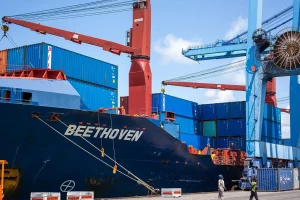
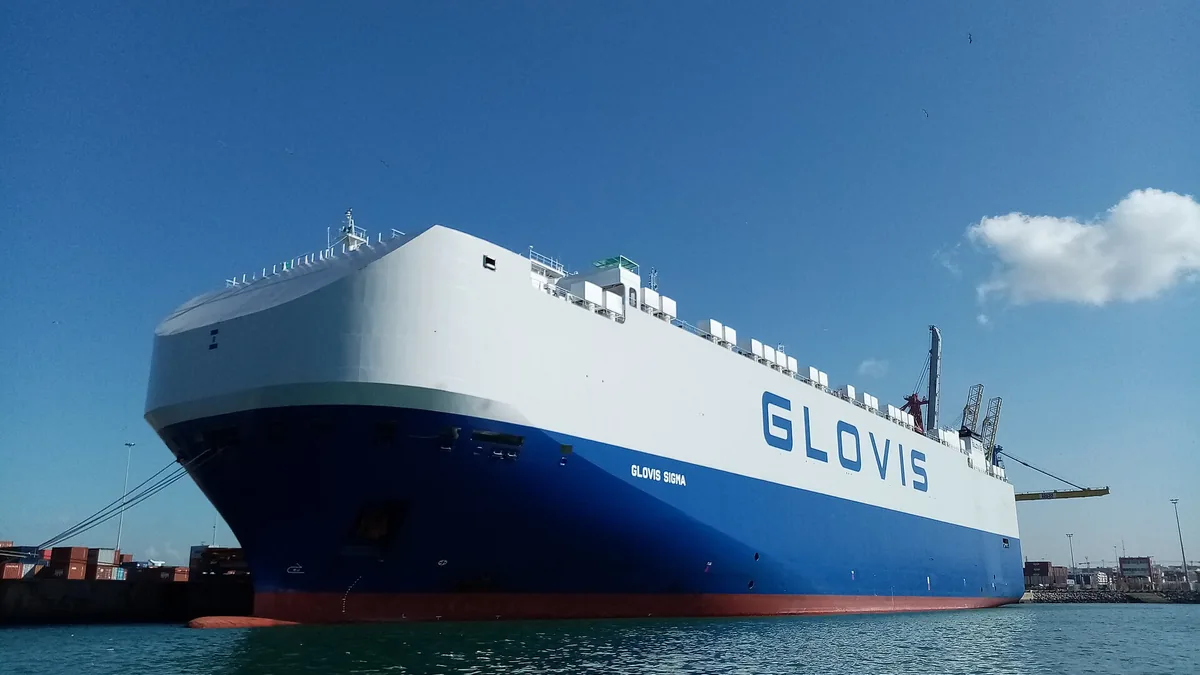
Most cars travel roll-on roll-off (RoRo), driven onto a car carrier. BE FORWARD, one of the largest exporters, tells buyers to expect roughly three to five weeks from the Japanese port to an African port, and its published Africa schedule shows October 2026 sailings reaching Mombasa between mid and late November. You will receive a bill of lading. Your clearing agent needs the original or a telex release.
Container shipping is also available and is sometimes used for higher-value cars, at a different price. Ask for both if you are unsure.
Step 6: Hire a Licensed Clearing Agent
Only a customs agent licensed by KRA can lodge your import entry. Before you hand over documents, ask for the firm’s name and check it against KRA’s licensed list; see our guide on clearing and forwarding licences in Kenya. The agent will need:
- The original bill of lading or telex release
- The commercial invoice and export certificate
- The Certificate of Roadworthiness
- Your KRA PIN and ID (or company documents)
- The logbook data transfer details for NTSA
The agent lodges the entry on KRA’s customs system, which generates the tax assessment. You pay KRA directly through the bank or KRA’s payment channels, not into the agent’s account, and keep the payment slip.
Step 7: Port Charges and Release
Port charges come from the Kenya Ports Authority tariff that took effect on 15 September 2025. A car cleared for use in Kenya gets the first five consecutive days after discharge free, weekends included. After that storage is charged per day: US$20 for a saloon, van or station wagon up to 1.5 tonnes and US$25 for an SUV or pick-up up to 2 tonnes. Handling charges also apply. Delays in paying duty quickly turn into storage bills, so have the tax money ready before the ship arrives.
Once KRA’s taxes are paid and the release order is issued, the agent collects the car, or arranges transport to Nairobi or wherever you are.
Step 8: Register With NTSA
After KRA releases the car, its details are passed to NTSA. Registration is done on the NTSA portal on eCitizen using the same KRA PIN as the import entry. If the PINs differ, the transfer fails. You accept the vehicle on your eCitizen account, pay the registration fee shown there and receive an e-logbook. Reflective number plates are applied for on eCitizen; NTSA announced a fee of KSh 3,050 in September 2025. Confirm current fees on eCitizen before paying.
How Much Does It Cost in Total?
A full landed cost has five parts: the price in Japan, freight and insurance, KRA taxes, clearing and port charges, and NTSA registration. Only KRA’s taxes follow a published formula, which is why our calculator gives exact tax figures and lets you add your own quotes for the rest. As an example, KRA’s taxes on a 2021 Honda Fit 13G.F (1,317cc) in 2026 come to about KSh 436,388, based on a CRSP of KSh 2,218,296 and 50% depreciation.
Common Mistakes
- Paying for a car that misses the age cutoff because of a late first registration date.
- Comparing cars on Japanese price instead of total landed cost.
- Choosing a 1,600cc or 1,800cc version without seeing the jump to 25% excise.
- Letting the car sit at the port past the free days while duty money is found.
- Paying tax money into an agent’s personal account.
Related: car loan calculator, car insurance estimator, NTSA inspection fees and transferring ownership on NTSA.
Prefer WhatsApp? Follow Business Radar on WhatsApp
Weekly, free. We only use your email for this newsletter and you can unsubscribe in one click. Privacy policy.