

Get breaking business news on WhatsApp
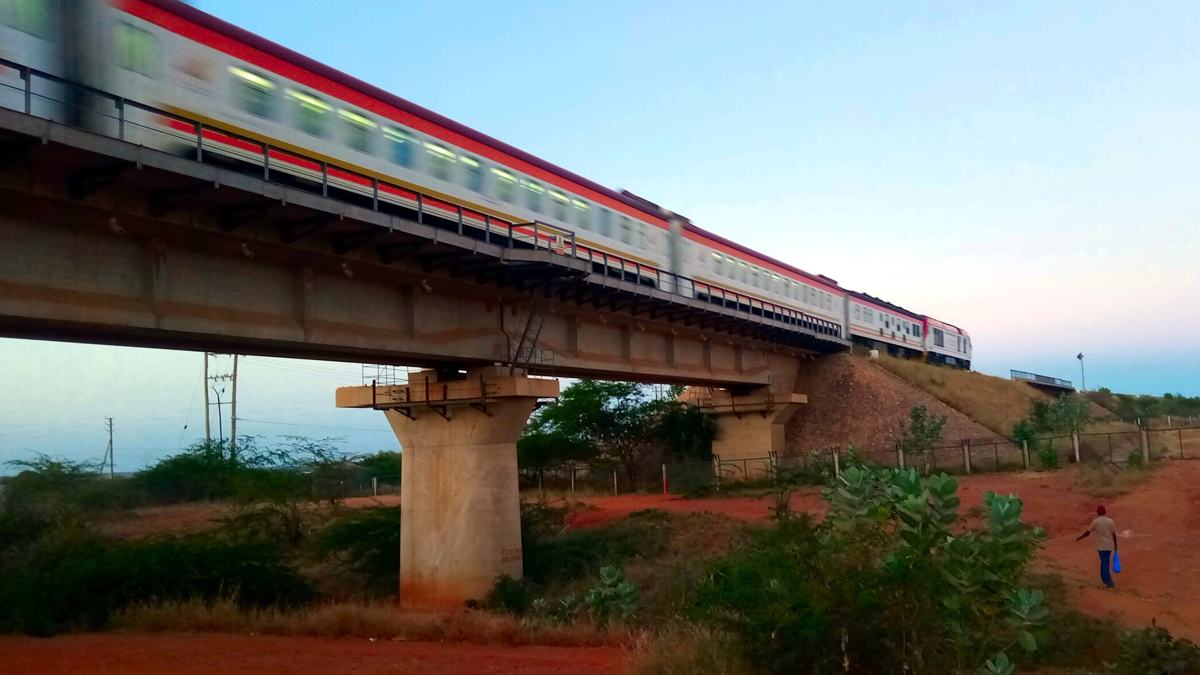
The estimated cost of extending the standard gauge railway (SGR) from Naivasha to Kisumu and on to Malaba has risen to KSh651.37 billion, KSh148.47 billion more than the government projected a year ago, according to a budget report published by the National Treasury.
The figure appears in the Energy, Infrastructure and ICT Sector Working Group report for the 2027/28 to 2029/30 medium-term budget, dated September 2026 and posted on the Treasury website this month. It lists “Development of SGR Phase 2B and 2C – 369KM” at a total cost of KSh651,370 million.
The previous edition of the same report, published in November 2025, put the project at KSh502,900 million. The new estimate is about 29.5% higher.
Less from the Exchequer, more from lenders
The split between local and foreign money has also changed. The new report expects KSh618.80 billion, or about 95% of the total, to come from foreign financing and KSh32.57 billion from the government. Last year’s report had KSh455.35 billion from foreign sources and KSh47.55 billion from the government.
That means the government’s planned share has fallen by about KSh15 billion while the amount expected from foreign financiers has grown by about KSh163 billion. The report does not name the lenders or explain how the foreign component will be raised.
The timeline has stretched as well. Both reports give a start date of July 7, 2025. Last year’s report listed expected completion as June 30, 2026, while the new one gives June 30, 2030.
KSh30bn spent, construction still at zero by June
According to the new report, cumulative spending on the project reached KSh30.23 billion by June 30, 2026, leaving KSh621.14 billion of the estimated cost outstanding. It puts the project’s completion status at 9%.
Physical construction is a different matter. The report’s performance table shows the State had targeted 10% of construction in 2024/25 and 20% in 2025/26, and achieved none in either year. Its remark reads: “Construction to commence in FY2026/27.”
Preparatory work met its target. The report says the resettlement action plan and environmental and social impact studies are complete, the review of the proposed route alignment is done and land use plans have been prepared. It also records that a “project commence order for early works” was issued on March 17, 2026, and that the project was launched on March 19, 2026.
For the coming budget cycle, the sector says it will “progress construction to 50% completion for SGR Phases 2B and 2C”. Its targets show 35% of construction in 2027/28 and 50% in 2028/29.
Where it sits in the wider budget
The railway sits in a sector that also carries large road, port and energy projects, several of which the government now wants private investors to fund. The Treasury is seeking a private partner to finish and toll the James Gichuru-Rironi road, and the Kenya Ports Authority is lining up concession deals at Mombasa and Lamu.
The sector reports feed into the Budget Policy Statement for 2027/28, whose draft was published this month. With about 95% of the SGR extension’s cost now pencilled in as foreign financing, the terms of that borrowing, once disclosed, will shape how much the line adds to Kenya’s external debt.
The 369km figure covers Phase 2B from Naivasha to Kisumu and Phase 2C from Kisumu to Malaba on the Uganda border. The report does not break down which parts of the cost increase come from the revised route, land acquisition, construction prices or financing.
Prefer WhatsApp? Follow Business Radar on WhatsApp
Weekly, free. We only use your email for this newsletter and you can unsubscribe in one click. Privacy policy.