


Get breaking business news on WhatsApp
Delivery app Glovo says it will invest a further KSh10 billion in Kenya by 2030 to take its service deeper into towns outside Nairobi, after orders on its platform rose 40% last year.
The company gave the figures on Friday, October 23, at its first Future of Commerce Summit in Kenya, held in Nairobi for retailers, brands and technology firms. According to the company, orders in Kenya grew 40% year on year in 2025.
Glovo said businesses on its platform have generated more than KSh20 billion in sales since it entered the Kenyan market in 2019, and that about 80% of that value has gone to small and medium-sized businesses. It operates in 12 towns and cities, works with more than 6,000 merchants and has more than 2,200 riders active each day.
The planned KSh10 billion is in addition to what the company has already put into the market, and is meant to support expansion beyond the capital.
From food to electronics
The summit was used to pitch the app as a general shopping platform rather than a food delivery service. Glovo pointed to its partnership with consumer electronics brand oraimo as an example of non-food sellers reaching customers through the app.
“The way Kenyans shop is changing, and businesses must adapt to these new consumer expectations,” said Caroline Mutuku, Glovo’s country managing director for Kenya. “Today, a customer wants convenience, choice, and the ability to access everyday products seamlessly without necessarily visiting a physical store.”
Saixu Fan, a regional manager at oraimo, said: “Our partnership with Glovo represents a critical shift in how consumer electronics are accessed in Kenya.”
The company also showed off an in-app assistant that works with AI language models such as ChatGPT and Claude, letting customers search for products by typing requests in ordinary language instead of scrolling through menus.
A competitive, consolidating market
Glovo competes in Nairobi with Uber Eats and Bolt Food, each with its own fee structure and coverage, as set out in our comparison of the three apps.
That rivalry may change shape. In July, Uber announced an offer to buy Delivery Hero, Glovo’s parent, at €41.50 a share, valuing the German group at $14.8 billion. Uber’s announcement lists Glovo’s operations in Kenya and Uganda among the businesses it would take over, across 50 markets in total. Delivery Hero’s boards backed the offer. Closing is expected in the second half of 2027 and depends on, among other things, merger control clearances.
Delivery Hero agreed separately to sell its businesses in 14 other markets, mostly where Uber Eats and Delivery Hero already overlap, to New York investment firm SSW Partners. Kenya is not on that list, so if the deal goes through Uber would own both Glovo and Uber Eats in Kenya. Uber said the combination would extend its platform to 99 markets.
What the numbers say
The company did not give revenue or profit figures for Kenya, and the KSh20 billion figure is a cumulative total over about seven years of merchant sales, not Glovo’s own income. Glovo also did not say how the new KSh10 billion would be split between technology, marketing, staff and rider incentives.
For merchants, the 80% share of sales going to smaller businesses is the key claim, since it suggests most of the money moving through the app is reaching smaller restaurants and shops. The company’s push into electronics and other goods also widens the range of sellers that can use it.
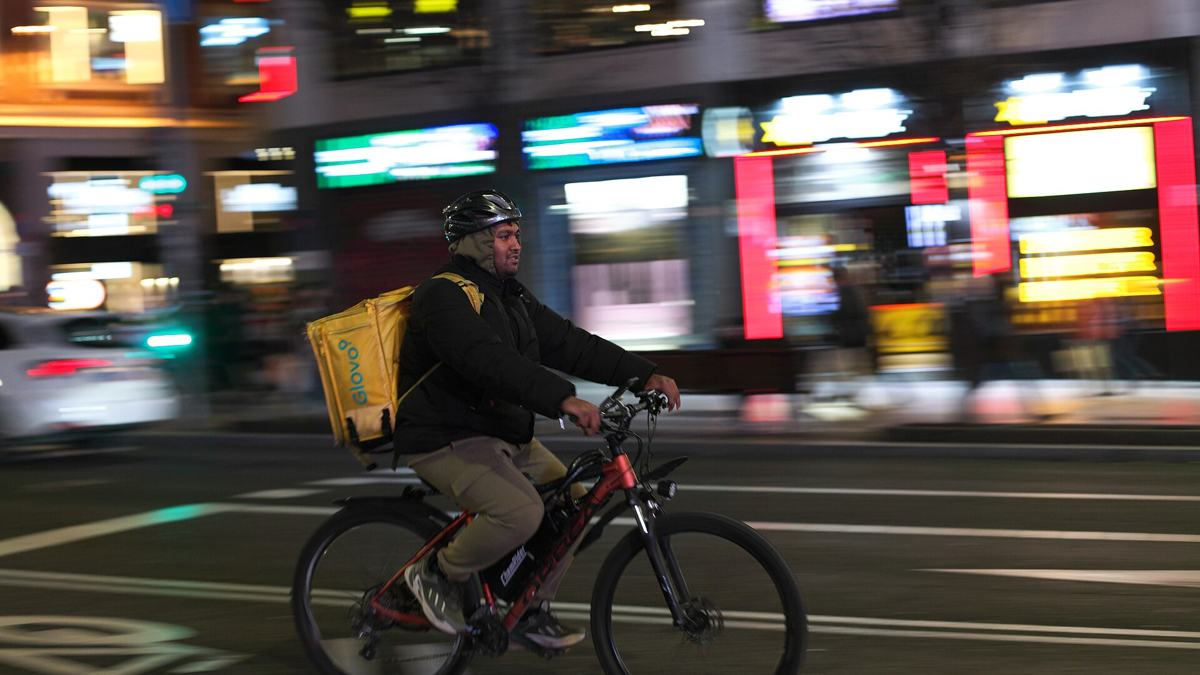
The expansion plan also matters for riders. With more than 2,200 riders active daily, growth into new towns would add work for couriers outside Nairobi.
Prefer WhatsApp? Follow Business Radar on WhatsApp
Weekly, free. We only use your email for this newsletter and you can unsubscribe in one click. Privacy policy.