


Get breaking business news on WhatsApp
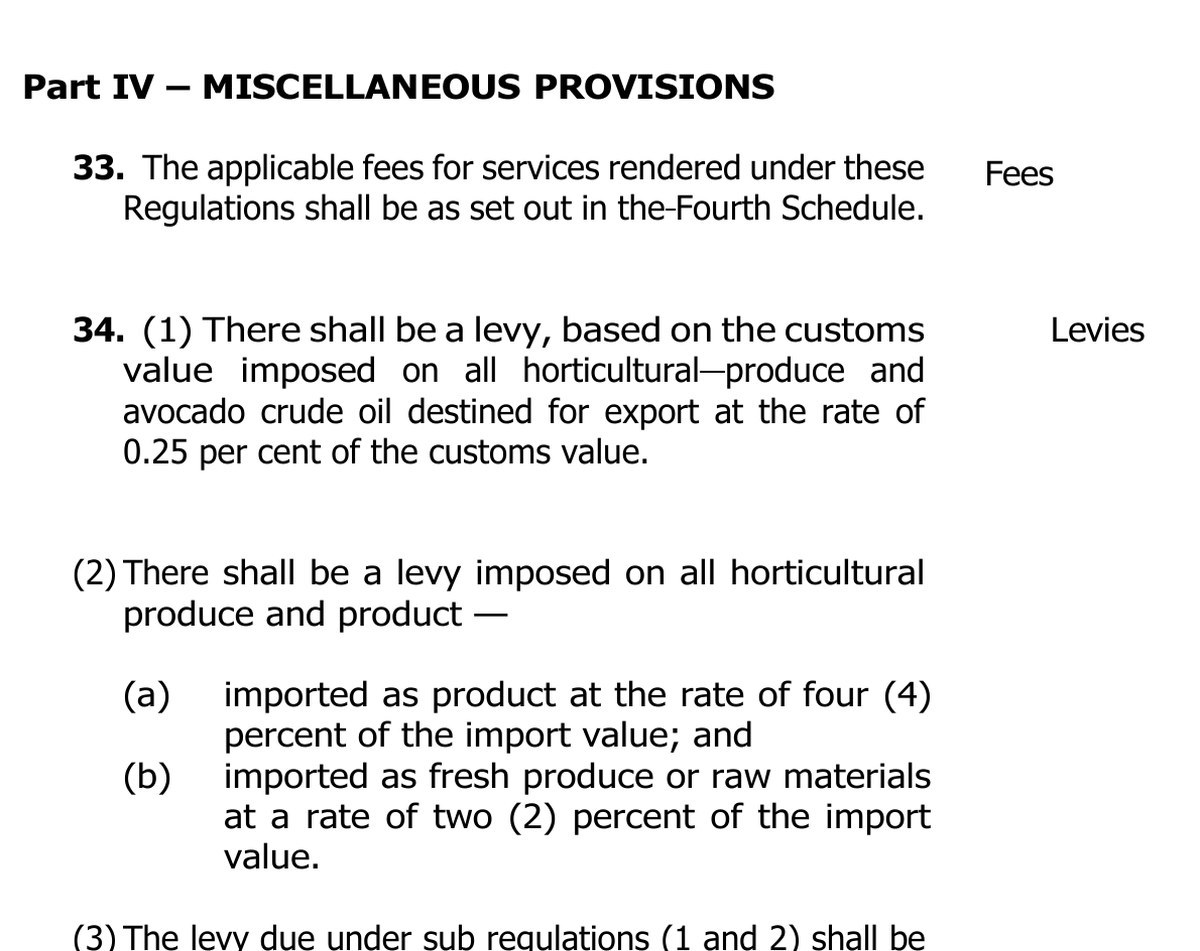
A new horticulture export levy of 0.25% of customs value would apply to all fruit, vegetable, flower and avocado oil exports from Kenya under draft regulations published by the Agriculture and Food Authority (AFA). Imports of horticultural produce would also pay a levy of 2% to 4% of their value.
The charges are in the draft Crops (Horticultural Crops) (Amendment) Regulations, 2026, which Agriculture Cabinet Secretary Mutahi Kagwe has put out for public comment. The levies would be paid to AFA and used “for the operations of the Authority and development of the industry”.
On this page
How the horticulture export levy would work
Regulation 34 of the draft sets three rates:
| Item | Proposed levy | On a KSh 1 million consignment |
|---|---|---|
| Horticultural produce and avocado crude oil for export | 0.25% of customs value | KSh 2,500 |
| Imported horticultural products (processed) | 4% of import value | KSh 40,000 |
| Imported fresh produce or raw materials | 2% of import value | KSh 20,000 |
Late payment of the horticulture export levy would be costly. Where AFA directs in writing, a business that fails to remit on time would pay 25% interest for the first month or part of a month, then 12% compound interest for each later month. Unpaid levies would be recovered as a civil debt.
New licence fees for exporters and pack houses
On top of the horticulture export levy, the Fourth Schedule lists annual fees: KSh 10,000 for an export licence, KSh 10,000 for an importer licence, KSh 10,000 for a horticultural produce processing licence, KSh 5,000 each for dealer and pack house registration, and KSh 5,000 to register a nursery or mother block for the export market. Inspections for produce conformity cost KSh 1,000 each.
Exporting without an export certificate would carry a fine of up to KSh 300,000, a year in jail, or both. Processing without a licence would attract a fine of up to KSh 500,000.
Traceability, pricing and 'Produce of Kenya' rules
Beyond the horticulture export levy, dealers would have to adopt the National Horticulture Traceability System or an AFA-approved equivalent, declare where their produce comes from, and set up a recall system for produce that poses food safety risks. Grower contracts would be deposited with AFA.
The draft creates an industry pricing committee chaired by a Ministry of Agriculture appointee, with two grower representatives and members for exporters, processors, marketing agents, the State Department of Trade, the Council of Governors and AFA. It would recommend a pricing formula to the Cabinet Secretary. Export packaging would carry the “Produce of Kenya” brand, and produce handlers would need a medical test every six months.
The rules would also revoke the Horticultural Crops Development Authority Order, 2011.
How to comment on the draft
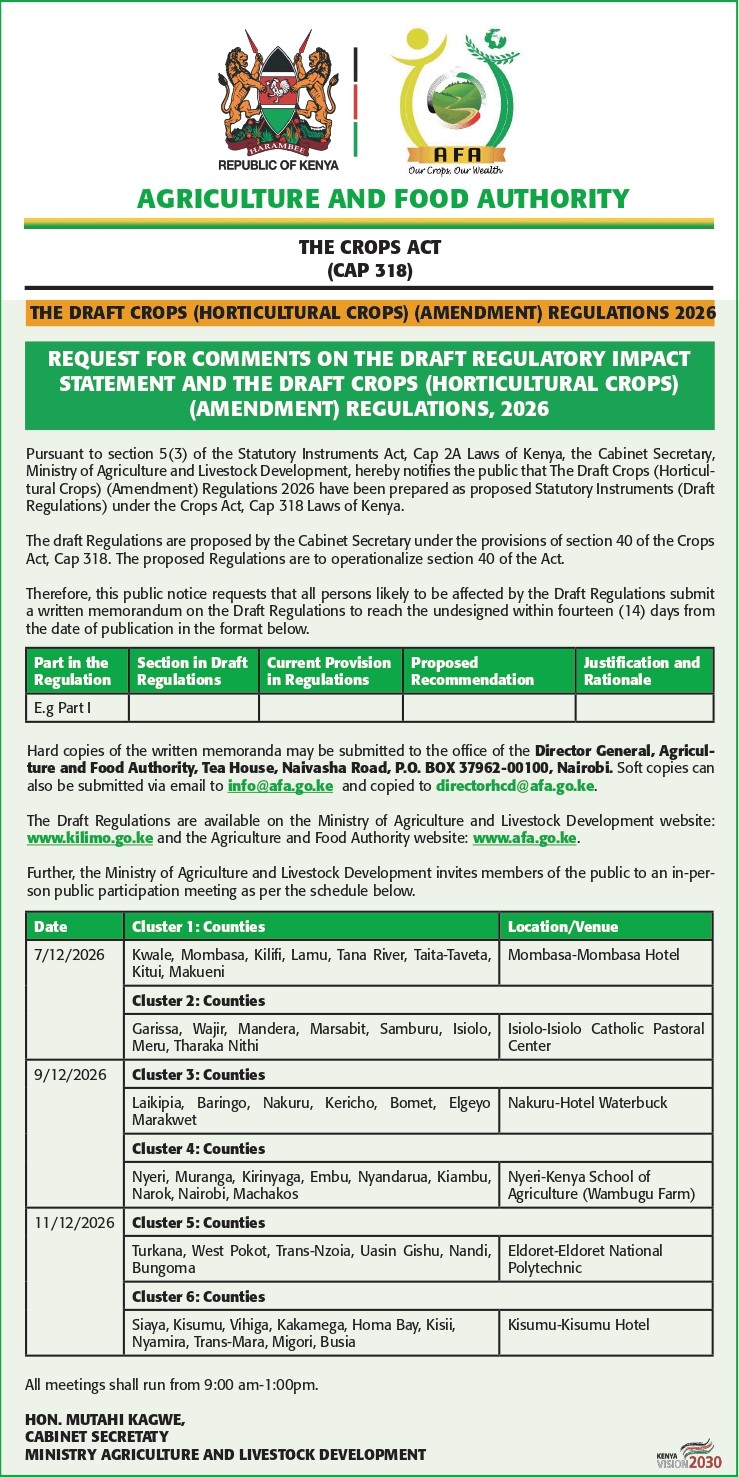
AFA asked anyone likely to be affected by the horticulture export levy or the other rules to send written memoranda within 14 days of publication to the Director General at Tea House, Naivasha Road, Nairobi, or by email. The notice was posted by AFA on 10 November 2026. In-person forums will run from 9am to 1pm on 7 December (Mombasa and Isiolo), 9 December (Nakuru and Nyeri) and 11 December (Eldoret and Kisumu).
The proposal comes as exporters already follow strict market rules; see our guides on avocado exports from Kenya and the certificate of origin. A separate export levy on tea was halted by a court, as covered in our report on the 0.8% tea levy suspension.
Frequently asked questions
What is the proposed horticulture export levy?
It is a 0.25% charge on the customs value of all horticultural produce and avocado crude oil exported from Kenya, proposed in the draft Crops (Horticultural Crops) (Amendment) Regulations, 2026.
How much would importers pay?
Imported processed horticultural products would pay 4% of import value, and fresh produce or raw materials 2%.
Who collects the levy?
The levy would be remitted to the Agriculture and Food Authority and used for its operations and industry development.
Is the horticulture levy already in force?
No. The regulations are a draft open for public comment, with county forums planned for 7, 9 and 11 December 2026.
Prefer WhatsApp? Follow Business Radar on WhatsApp
We will email you a weekly money and business brief. We store your email (and your name, if you give one) for that purpose, under the Kenya Data Protection Act, 2019. You can unsubscribe at any time. Privacy policy.

