


Get breaking business news on WhatsApp
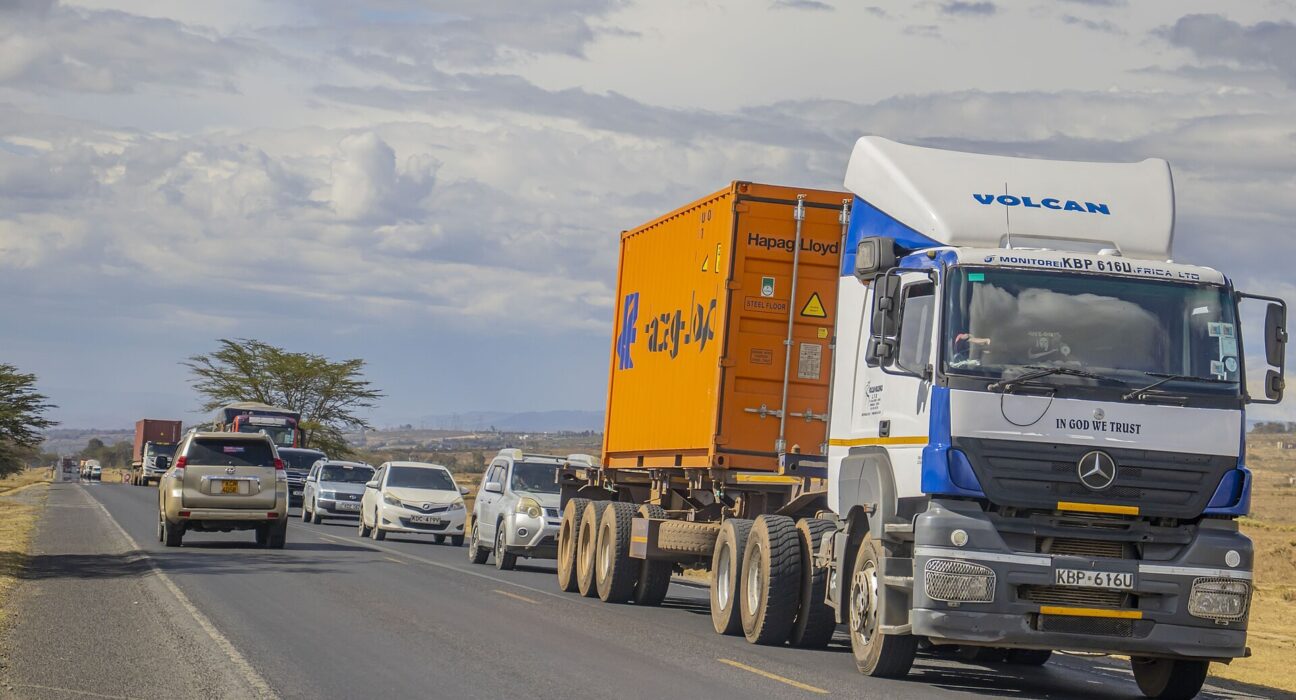
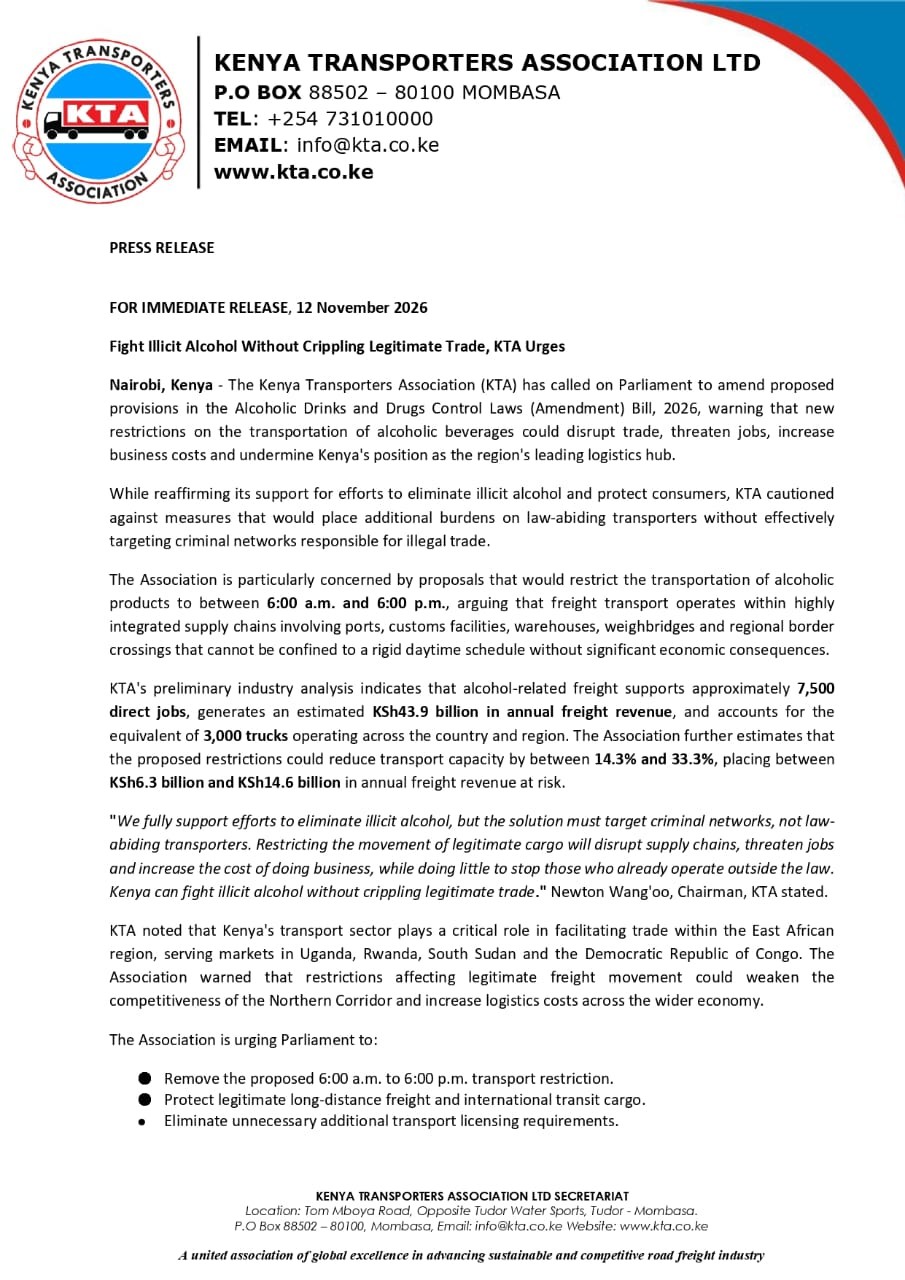
The Kenya Transporters Association (KTA) has asked Parliament to drop a proposal that would limit alcohol transport to daytime hours, warning that it could put between KSh 6.3 billion and KSh 14.6 billion in annual freight revenue at risk. In a press release dated 12 November 2026, the association said the restriction in the Alcoholic Drinks and Drugs Control Laws (Amendment) Bill, 2026 would disrupt supply chains and raise the cost of doing business.
“We fully support efforts to eliminate illicit alcohol, but the solution must target criminal networks, not law-abiding transporters,” said KTA Chairman Newton Wang’oo.
On this page
What the Bill says about alcohol transport
Clause 33 of the Bill would add a new section 49A to the Alcoholic Drinks Control Act (Cap. 121). It says alcoholic drinks transported for distribution must move only “between the hours of 6.00 am and 6.00 pm”.
The same section would require vehicles carrying alcohol to be branded in colours set out in regulations, and anyone who wants to transport alcoholic drinks commercially would need a transporters licence from the relevant authority. Breaking the section would be an offence.
The Bill is better known for raising the drinking age; see our report on the drinking age 21 alcohol Bill. It also carries the proposed nicotine pouch ban.
KSh14.6bn and 7,500 jobs: KTA's figures
KTA said its preliminary industry analysis shows alcohol-related freight supports about 7,500 direct jobs and earns an estimated KSh 43.9 billion a year in freight revenue. That work is done by the equivalent of 3,000 trucks running across Kenya and the region.
Cutting operations to a 12-hour window could reduce transport capacity by between 14.3% and 33.3%, the association estimated, which is how it arrived at the KSh 6.3 billion to KSh 14.6 billion range. On KTA’s numbers, each of those trucks earns about KSh 14.6 million a year from alcohol freight.
The association argued that freight moves through ports, customs facilities, warehouses, weighbridges and border crossings that “cannot be confined to a rigid daytime schedule without significant economic consequences”. It said the rule could weaken the Northern Corridor, which serves Uganda, Rwanda, South Sudan and the Democratic Republic of Congo.
What transporters want Parliament to change
KTA asked MPs to:
- remove the 6.00 am to 6.00 pm transport restriction;
- protect long-distance freight and international transit cargo;
- drop extra transport licensing requirements;
- shield transporters from liability for offences by third parties where reasonable due diligence has been done;
- use digital traceability and intelligence-led enforcement instead;
- carry out a full economic impact assessment first; and
- consult transport stakeholders before the law is finalised.
The debate comes as the alcohol industry also faces a tax review; see our report on excise duty on spirits. Truck operators are still adjusting to KRA’s new cargo tracking rules, covered in KRA’s switch to private e-seal vendors.
The Bill is still before Parliament and has not been passed.
Frequently asked questions
What is the proposed alcohol transport restriction in Kenya?
The Alcoholic Drinks and Drugs Control Laws (Amendment) Bill, 2026 would allow alcoholic drinks to be transported for distribution only between 6.00 am and 6.00 pm, require branded vehicles and a transporters licence.
How much freight revenue is at risk?
The Kenya Transporters Association estimates between KSh 6.3 billion and KSh 14.6 billion a year, out of about KSh 43.9 billion in annual alcohol freight revenue.
How many jobs depend on alcohol transport?
KTA says alcohol-related freight supports about 7,500 direct jobs and the equivalent of 3,000 trucks.
Is the alcohol transport rule already law?
No. It is a proposal in a Bill before Parliament. It would only apply if the Bill is passed and signed into law.
Prefer WhatsApp? Follow Business Radar on WhatsApp
We will email you a weekly money and business brief. We store your email (and your name, if you give one) for that purpose, under the Kenya Data Protection Act, 2019. You can unsubscribe at any time. Privacy policy.

