


Get breaking business news on WhatsApp
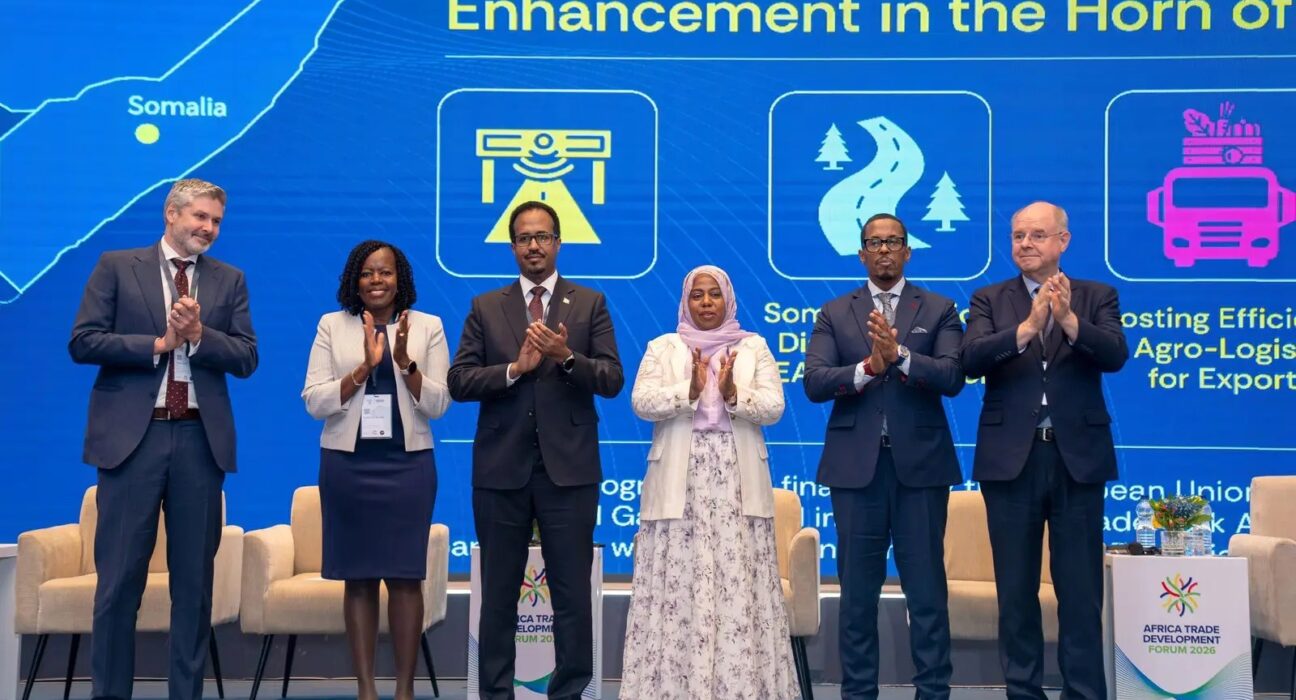
ATDF 2026 in Addis Ababa produced a signed financing deal for the Horn of Africa, as the European Union committed €20 million (about KSh 2.86 billion) to a four-year trade and transport programme with Ethiopia, Djibouti, Somalia and TradeMark Africa (TMA). The Africa Trade Development Forum also put product standards, certification and mutual recognition of test results at the centre of the continental export debate. The money is for the three Horn states, not Kenya, but the quality rules discussed at ATDF are the same tests Kenyan exporters already face in regional and European markets.
The forum ran on 23 and 24 November 2026 at the Ethiopian Skylight Hotel. It was co-hosted by Ethiopia’s Ministry of Trade and Regional Integration and TMA, under the theme Building Africa’s Exports Through Quality. TMA said more than 350 policymakers, trade ministers, industrialists, standards authorities, financiers and development partners took part. A technical follow-up day was listed for 25 November. As of 29 November, TMA’s press room had not published a closing communiqué or the text of any ministerial commitments.
On this page
The EU deal signed at ATDF
The European Union signed and launched the programme on the sidelines of ATDF on 23 November. The official name is Global Gateway Corridor Action: Green and Digital Action for Trade and Transport Enhancement in the Horn of Africa. TMA will implement it, with a focus on digital trade and transport systems, agricultural export logistics, greener freight and regional trade integration.
The signing was witnessed by H.E. Yasmin Wohabrebbi, Ethiopia’s minister of trade and regional integration; Hon. Orbis Helaf Orbis, Djibouti’s minister of commerce and tourism; and Amb. Gamal Hassan, Somalia’s minister of commerce and industry. TMA said the agreement brings the three neighbouring countries together to tackle trade barriers that run across borders.
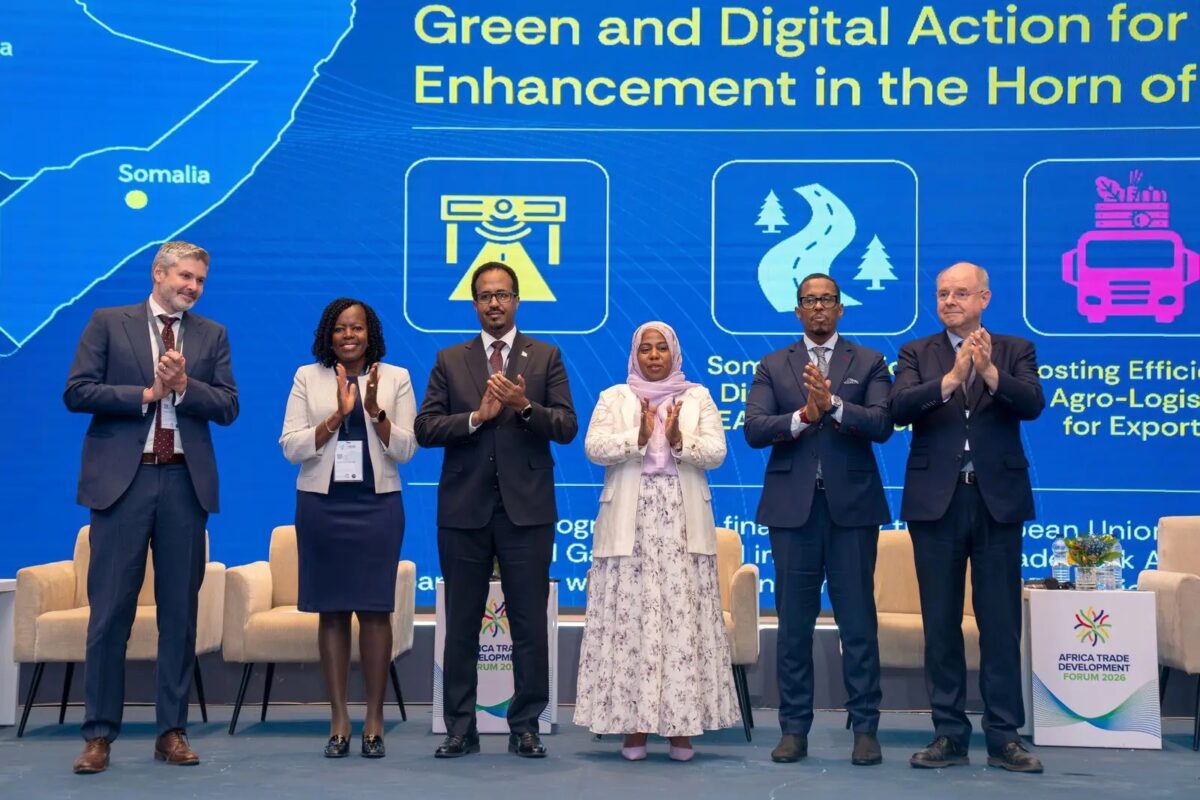
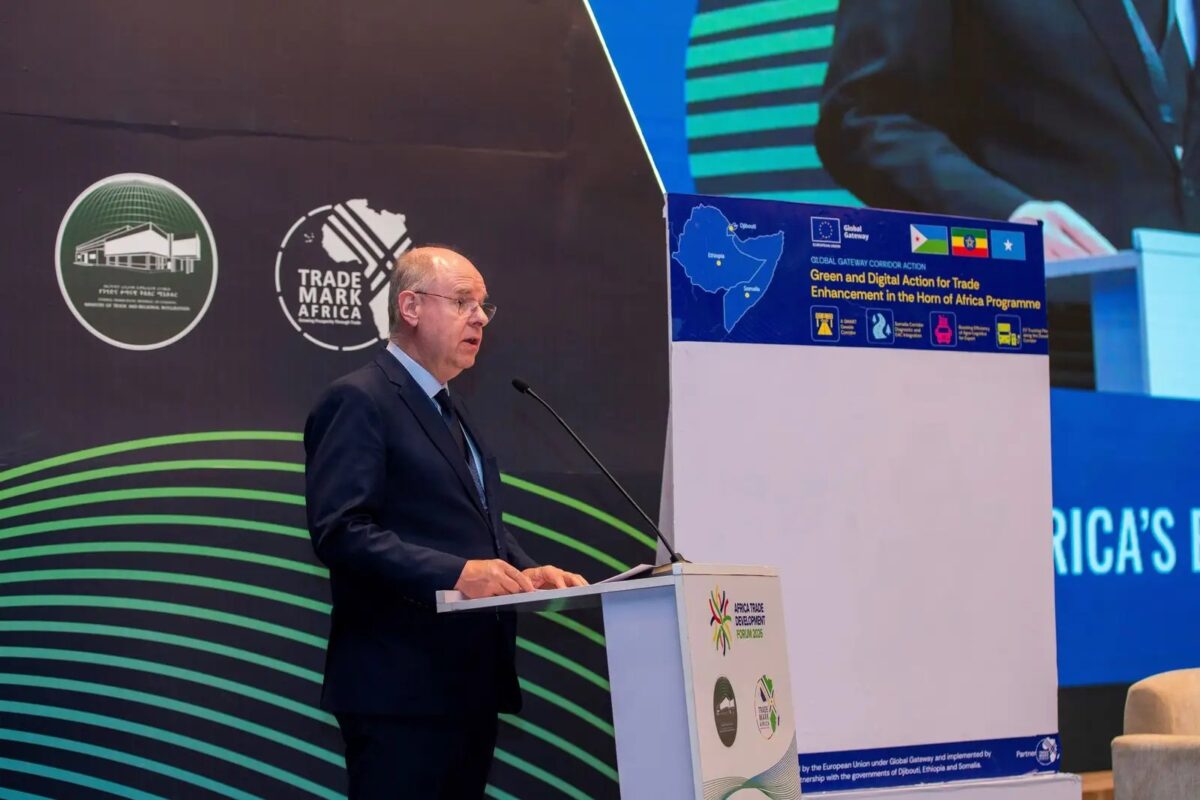
Daniel Hachez, head of partnerships at the European Union Delegation to Ethiopia, said the Horn’s economic potential “depends on stronger links between its countries, markets and businesses” and that the new investment “extends that partnership across the region, making regional trade more efficient and sustainable”.
Celestine Munda, TMA’s vice board chair, said a trade corridor “works only when every part works together” and that digital systems, regulatory reform and institutional cooperation “must advance in step” if businesses are to face lower, more predictable costs.
The new programme builds on an existing €32 million (about KSh 4.57 billion) EU-funded Djibouti-Ethiopia corridor programme, also implemented by TMA. TMA said that corridor handles 95% of Ethiopia’s import-export trade by volume. The current programme is financed under the EU’s Global Gateway strategy, with funding delegated to Agence Française de Développement, and is aligned with the Horn of Africa Initiative and the African Continental Free Trade Area (AfCFTA).
| Programme | Amount | About, in KSh | Where it applies |
|---|---|---|---|
| New Global Gateway Horn corridor action (four years) | €20 million | KSh 2.86 billion | Ethiopia, Djibouti and Somalia |
| Existing Djibouti-Ethiopia corridor programme | €32 million | KSh 4.57 billion | Djibouti-Ethiopia corridor |
Conversions use the Central Bank of Kenya indicative euro rate of KSh 142.89 on 27 November 2026.
TMA listed results from the existing corridor programme. In Ethiopia, an electronic phytosanitary certification system (ePhyto) has enabled more than 80 exporters to exchange electronic certificates through a network covering close to 110 countries. Programme-supported export compliance work has coincided with a fall in False Codling Moth interceptions, from seven cases in 2023-24 to zero in 2024-25. In Djibouti, user acceptance testing for an Electronic Cargo Tracking System has been completed across 13 monitoring zones and 12 cargo-control modules, and a joint roadmap towards a one-stop border post at Galafi is under way.
What ATDF put on the table
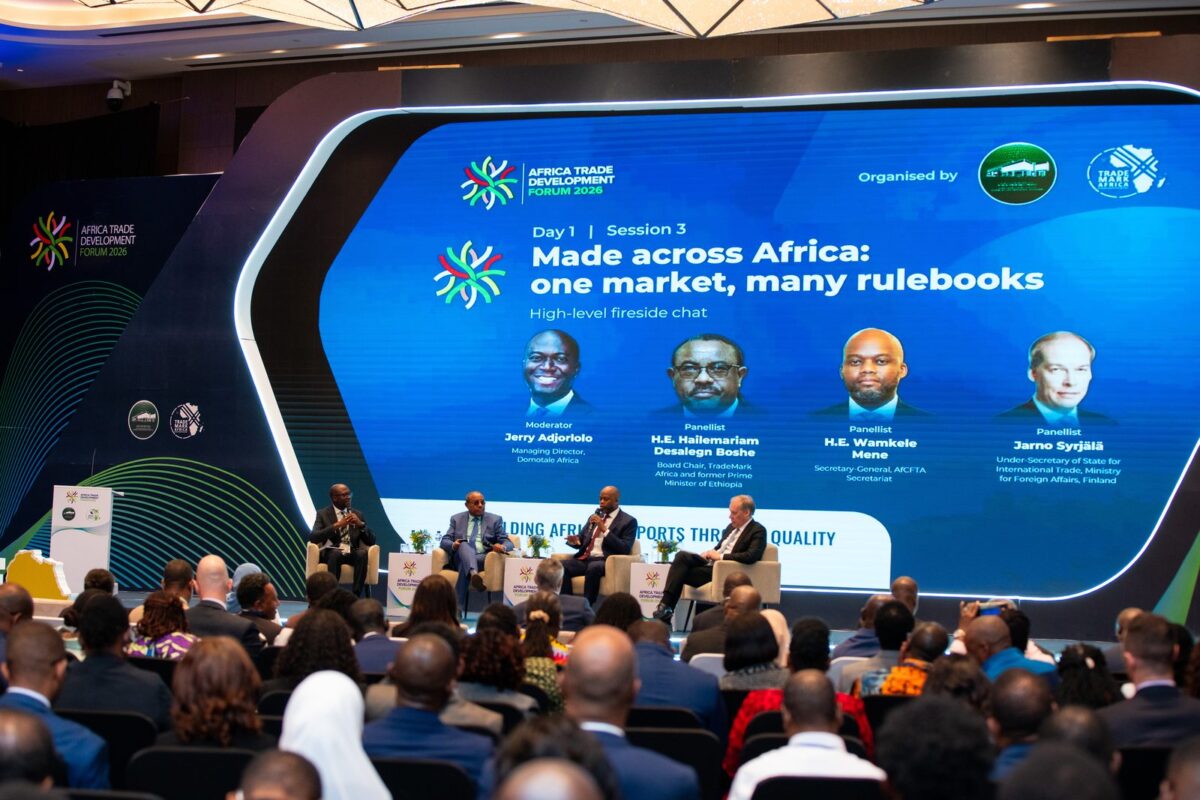
ATDF opened on 23 November with Ethiopia’s deputy prime minister, H.E. Temesgen Tiruneh, former prime minister and TMA board chair H.E. Hailemariam Desalegn Boshe, and AfCFTA secretary-general H.E. Wamkele Mene. Trade ministers from Ethiopia, the Democratic Republic of Congo, Uganda, Rwanda, South Sudan, Somalia and Djibouti attended the opening, as did Finland’s under-secretary of state for international trade, H.E. Jarno Syrjälä.
Minister Wohabrebbi told ATDF that Africa’s trade prospects “should not be measured by export volumes alone” and pointed to product quality, certification and regulatory recognition as critical to competitiveness. She also called for products certified in one African market to be accepted in another, to cut repeated compliance costs.
TMA’s opening statement put the same problem in practical terms: even where tariffs have been cut, exporters still have to show that goods meet the health, safety, technical and environmental rules of the destination market. Without recognised laboratories, certification bodies and quality systems, market access can stall.
The official programme set a ministerial roundtable on 24 November, chaired by Hailemariam Desalegn Boshe, at which governments were to consider commitments on standards, mutual recognition and quality infrastructure through 2030. TMA has not yet published what, if anything, those ministers agreed. The 2026 forum follows the 2024 ATDF in Kigali, where TMA said more than 300 government and business leaders backed a shift towards digital trade and no-stop borders, later taken forward in funding commitments and pilot projects.
What it means for Kenyan traders
The €20 million package will be spent in Ethiopia, Djibouti and Somalia. Kenyan firms should not expect a new grant window in Nairobi from this announcement. The wider ATDF agenda still matters here, because Kenyan exporters already sell into the EU and into African markets that are tightening, not loosening, checks on food safety, traces and standards.
Kenya’s merchandise trade with the European Union is material. See our report on Kenya EU trade, which set out how large a share of Kenyan exports already goes to the bloc. Horticulture exporters in particular live with inspection and certification costs; our guides to avocado export rules and the proposed horticulture export levy show how those costs stack up before a consignment leaves Mombasa or Jomo Kenyatta International Airport.
If African governments eventually accept one another’s certificates, as the Ethiopian minister urged at ATDF, a KEBS or KEPHIS result accepted in Kampala or Kigali would save Kenyan SMEs the cost of testing the same goods twice. That is the promise, not yet a published pact. Until a text appears, traders should treat mutual recognition as a policy direction, not a new right they can cite at the border.
Somalia’s place in the new Horn programme also sits alongside its role as an East African Community partner state. Faster, cleaner trade on the Djibouti-Ethiopia corridor and a more integrated Somali market would change the map for firms already selling into the region, including those using the EAC common external tariff. For comparison with other African market pushes this week, see our report on Kenya Zimbabwe trade.
Cold-chain and port logistics remain the other half of the quality problem. The Netherlands and the EU have already backed a Naivasha hub for flowers and fruit; that context is in our report on the Naivasha cold-chain hub. ATDF’s message was that roads and ports are not enough if the certificate in the consignment file is not trusted.
Frequently asked questions
What deal was signed at ATDF 2026?
On the sidelines of ATDF in Addis Ababa on 23 November 2026, the European Union signed a €20 million (about KSh 2.86 billion), four-year Global Gateway programme with Ethiopia, Djibouti, Somalia and TradeMark Africa to improve digital trade, agricultural export logistics and greener freight in the Horn of Africa.
Does the EU Horn of Africa deal include Kenya?
No. The €20 million is for Ethiopia, Djibouti and Somalia. Kenya is not a signatory. The quality and mutual-recognition debate at ATDF still matters to Kenyan exporters selling into the EU and other African markets.
What did ministers agree at ATDF?
TMA said participating governments would consider commitments on standards, mutual recognition and quality infrastructure through 2030. As of 29 November 2026, TMA had not published a closing communiqué or the text of those commitments.
How was the KSh figure calculated?
€20 million is about KSh 2.86 billion, and the existing €32 million Djibouti-Ethiopia programme is about KSh 4.57 billion, using the Central Bank of Kenya indicative euro rate of KSh 142.89 on 27 November 2026.
Prefer WhatsApp? Follow Business Radar on WhatsApp
We will email you a weekly money and business brief. We store your email (and your name, if you give one) for that purpose, under the Kenya Data Protection Act, 2019. You can unsubscribe at any time. Privacy policy.

