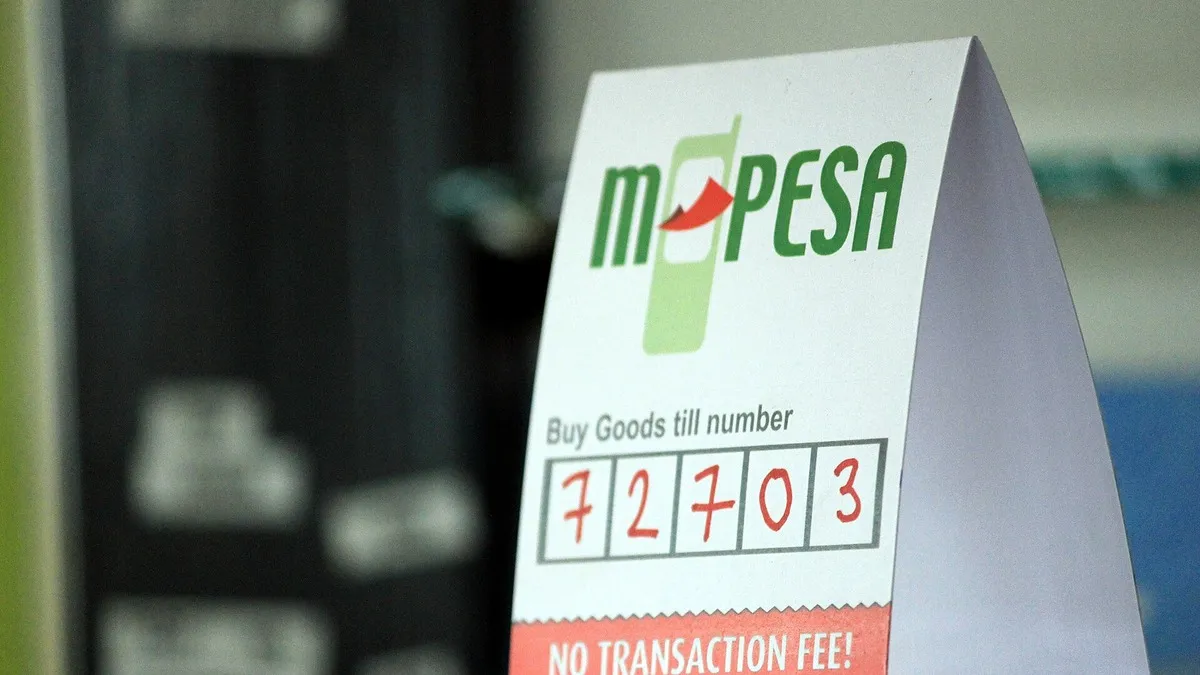
If you keep both a Safaricom and an Airtel line, you have probably wondered which wallet is cheaper to use. Most people in Kenya use M-Pesa because nearly everyone they pay is on it. Airtel Money has a different advantage: sending money to another Airtel Money user costs nothing. This guide compares the two on what you actually pay, how much you can move, and where each one works best.
All charges below are in Kenya shillings and come from the tariffs Safaricom and Airtel Kenya currently publish. Always check the fee on the confirmation screen before you enter your PIN, because both companies change their rates from time to time.
The biggest difference: sending within the same network
This is where the two wallets differ most.
- Airtel Money to Airtel Money is free at every amount. Airtel has waived all person-to-person fees, so sending KSh 200 or KSh 200,000 to another Airtel Money user costs you nothing.
- M-Pesa to M-Pesa is free only up to KSh 100. After that you pay a fee based on the amount, from KSh 7 up to a maximum of KSh 108.
If you regularly send money to family or staff who also use Airtel Money, Airtel will save you real money over a month.
Send money charges compared
The table below shows the M-Pesa fee to another M-Pesa user, and what each wallet charges to send to another network (for example M-Pesa to Airtel Money, or Airtel Money to M-Pesa).
| Amount (KSh) | M-Pesa to M-Pesa | M-Pesa to other networks | Airtel to Airtel | Airtel to other networks |
|---|---|---|---|---|
| 1 to 49 | Free | Free | Free | Not available |
| 50 to 100 | Free | Free | Free | Not available |
| 101 to 500 | 7 | 7 | Free | 7 |
| 501 to 1,000 | 13 | 13 | Free | 13 |
| 1,001 to 1,500 | 23 | 23 | Free | 23 |
| 1,501 to 2,500 | 33 | 33 | Free | 33 |
| 2,501 to 3,500 | 53 | 53 | Free | 53 |
| 3,501 to 5,000 | 57 | 57 | Free | 57 |
| 5,001 to 7,500 | 78 | 78 | Free | 78 |
| 7,501 to 10,000 | 90 | 90 | Free | 90 |
| 10,001 to 15,000 | 100 | 100 | Free | 100 |
| 15,001 to 20,000 | 105 | 105 | Free | 105 |
| 20,001 and above | 108 | 108 | Free | 108 |
Two things stand out. First, once you cross networks, both wallets charge exactly the same in every band. Second, Airtel’s published tariff shows no cross-network option for amounts below KSh 101, while M-Pesa lets you send up to KSh 100 to other networks for free.
Use the calculator below to check the fee for any amount on either wallet.
So the choice is simple. If the person you are paying is on Airtel Money, use Airtel Money. If they are on M-Pesa, it makes no difference to the fee which wallet you send from, so use whichever has the balance.
Cash withdrawal charges at an agent
Withdrawing at an agent costs the same on both wallets.
| Amount (KSh) | M-Pesa agent | Airtel Money agent |
|---|---|---|
| 50 to 100 | 11 | 11 |
| 101 to 2,500 | 29 | 29 |
| 2,501 to 3,500 | 52 | 52 |
| 3,501 to 5,000 | 69 | 69 |
| 5,001 to 7,500 | 87 | 87 |
| 7,501 to 10,000 | 115 | 115 |
| 10,001 to 15,000 | 167 | 167 |
| 15,001 to 20,000 | 185 | 185 |
| 20,001 to 35,000 | 197 | 197 |
| 35,001 to 50,000 | 278 | 278 |
| 50,001 and above | 309 | 309 |
The minimum you can withdraw at an M-Pesa agent is KSh 50. M-Pesa also lets you withdraw at partner bank ATMs, with fees starting at KSh 35 for KSh 200 to KSh 2,500.
A practical tip: because withdrawal fees jump at certain points, withdrawing KSh 2,500 costs KSh 29 while KSh 2,600 costs KSh 52. Plan your withdrawals around the bands where you can.
Transaction and balance limits
Here the two wallets are identical, since the caps follow Central Bank of Kenya rules for mobile money.
| Limit | M-Pesa | Airtel Money |
|---|---|---|
| Maximum per transaction | KSh 250,000 | KSh 250,000 |
| Maximum per day | KSh 500,000 | KSh 500,000 |
| Maximum wallet balance | KSh 500,000 | KSh 500,000 |
If you run a business that handles more than this, you will need a till, paybill or a bank account linked to your wallet. Our guide on choosing between Pochi, Till or Paybill explains which one fits different kinds of businesses.
ID requirements at agents
Both networks ask for identification when you deal with an agent.
- Airtel Money asks for your original National ID or Kenyan passport at any agent outlet.
- M-Pesa accepts a Kenyan National ID, Kenyan passport, foreign passport, military ID or foreigner certificate for deposits and withdrawals. Registration at an agent needs a Kenyan ID or passport, while foreigners and military ID holders register at a Safaricom shop.
Coverage and acceptance
M-Pesa is by far the more widely accepted wallet. Most shops, utilities, schools, landlords and online stores in Kenya list an M-Pesa till or paybill, and you will find M-Pesa agents in almost every town and trading centre. If you only want one wallet that works everywhere, M-Pesa is still the safe choice.
Airtel Money has a smaller agent and merchant network, so in some areas you may walk further to find an agent, and fewer businesses take it directly. That said, because you can send from Airtel Money to M-Pesa users, you can still pay most people from an Airtel wallet. You just pay the cross-network fee.
Which one should you use?
Use Airtel Money when:
– The people you send to most often are also on Airtel Money
– You send large amounts between family members and want to avoid fees
– You want a second wallet as a backup when one network is down
Use M-Pesa when:
– You pay shops, bills and businesses, since most of them use M-Pesa tills and paybills
– You need an agent nearby wherever you travel
– You use services like Fuliza, M-Shwari or KCB M-Pesa, which are tied to your Safaricom line
Many Kenyans end up keeping both. They receive and pay bills on M-Pesa, and move money within the family on Airtel Money to save on fees.
A few things to keep in mind
- Fees are shown on the confirmation screen before you enter your PIN. If the fee looks wrong, cancel.
- Both companies revise tariffs. The figures here reflect the published tariffs as of October 2026.
- If you are paid wages or casual job earnings through mobile money, ask your employer which network they use so you are not losing money on withdrawals. If you are looking for work, you can browse current openings on JobinKenya.