Get breaking business news on WhatsApp
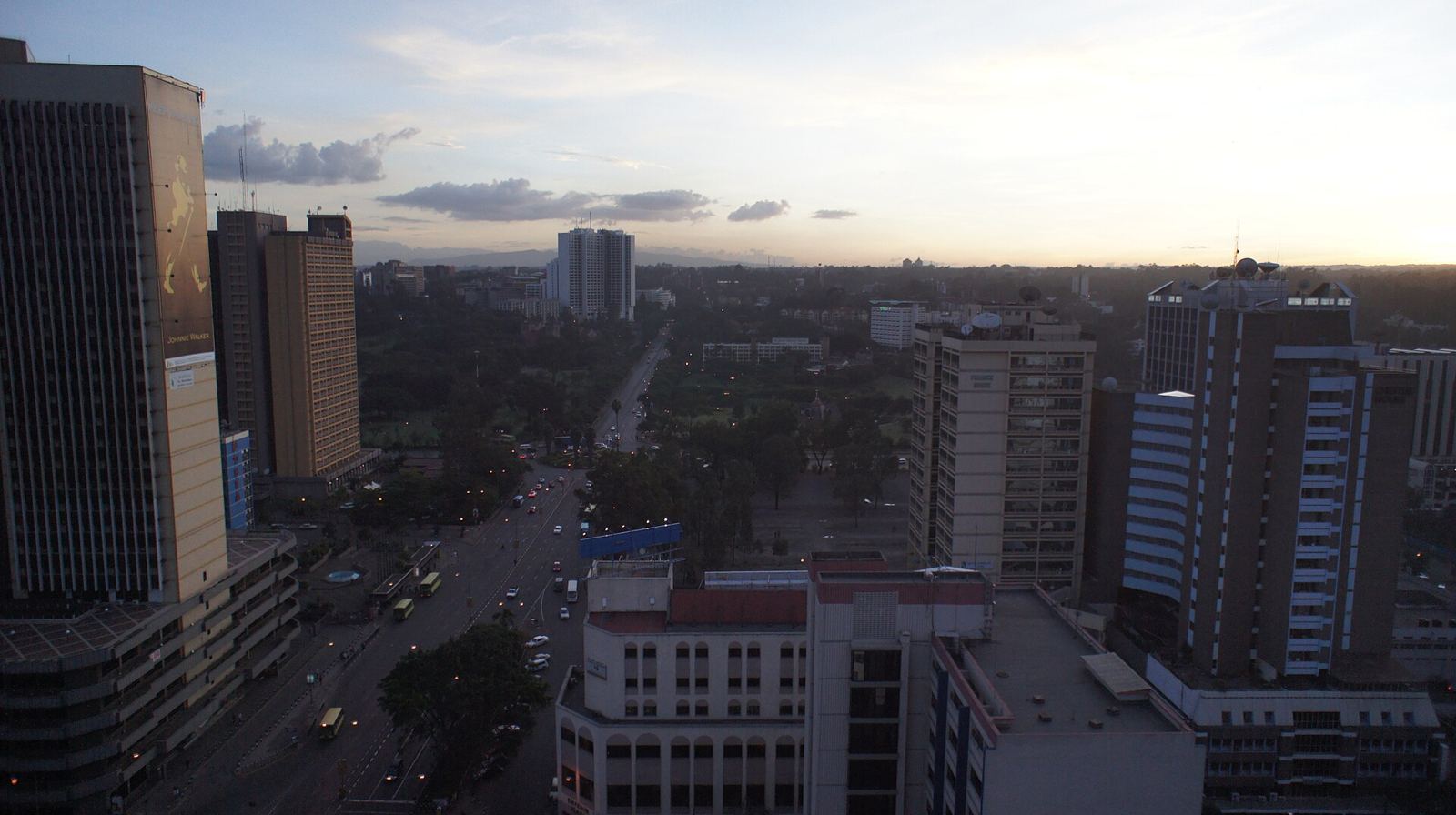
Kenya has reclaimed its place as East Africa’s largest economy, ending five years in which Ethiopia held the top spot, according to the International Monetary Fund’s October 2026 World Economic Outlook.
The IMF data puts Kenya’s gross domestic product at $135.92bn (about KSh17.6trn) for 2025, ahead of Ethiopia’s $126.35bn (about KSh16.4trn). For 2026 the Fund projects Kenya’s economy at $151.15bn (about KSh19.6trn), against $127.15bn (about KSh16.5trn) for Ethiopia, widening the gap to roughly $24bn.
Currency moves, not faster growth
The change at the top of the regional table has little to do with Kenya outpacing its neighbour. In real terms, Ethiopia grew 9.2% in 2025, about twice Kenya’s 4.6%. The reversal comes from how each economy is valued in US dollars.
Ethiopia let the birr fall by more than a third against the dollar from mid-2024 as part of the conditions attached to IMF financing. That devaluation cut the dollar value of its output by about 40%, from $210bn in 2024 to $126.35bn in 2025. Over the same period, a steadier Kenyan shilling helped lift Kenya’s dollar GDP by about 13.7%.
The shilling has stayed calm into the fourth quarter. The Central Bank of Kenya’s latest weekly bulletin had it trading at KSh129.81 to the dollar on October 15, compared with KSh129.94 a week earlier, while reserves stood at $14.7bn, enough for 5.9 months of imports. Steady diaspora remittances, which rose to $438.5m in September, have helped support the currency.
Where Kenya ranks in Africa
The new figures place Kenya seventh in Africa by nominal GDP, behind South Africa ($489bn), Egypt ($443bn), Nigeria ($387bn), Algeria ($332bn), Morocco ($196bn) and Angola ($157bn). Ghana ($129bn) and Ethiopia follow, with the Democratic Republic of Congo tenth at $122bn.
Within the East African Community, the gap is wide. Tanzania’s economy is estimated at $96bn and Uganda’s at $72bn. The IMF also projects that Kenya will pass oil-producing Angola in 2028 to become Africa’s sixth-largest economy.
Growth outlook
The Fund expects Kenya’s real growth to ease slightly to 4.5% in 2026 before picking up to 4.7% in 2027. Ethiopia is forecast to keep expanding much faster, at 9.2% in 2026 and 7.8% in 2027, which means its dollar GDP could recover if the birr stabilises.
Local data has been firmer than the IMF’s annual figure. The Kenya National Bureau of Statistics reported that the economy grew 5.1% in the second quarter despite the oil price shock that pushed up fuel and transport costs.
For the wider region, the IMF expects sub-Saharan Africa to grow 4.5% in both 2026 and 2027, the same pace as 2025. It warned that the average hides slowing growth in economies that rely less on natural resources, and said risks remain “decidedly tilted to the downside” because of high interest bills, thin reserves in many countries and falling aid. Global growth is forecast to slow to 3.1% this year before rising to 3.4% in 2027.
What the ranking means
A bigger dollar GDP strengthens Kenya’s pitch to foreign investors and lenders, and it comes as the Treasury negotiates budget support with the World Bank and the African Development Bank. It does not, however, change conditions for most households. Critics point out that living costs remain high and that millions of Kenyans still live in extreme poverty, so the headline ranking says more about exchange rates than about incomes.
Investors tracking the shilling and government borrowing costs can follow the weekly Treasury bill auction results, where the 91-day rate recently eased to 8.75%. Regional comparisons are also shifting in Uganda, where the central bank raised its key rate to 12% as a weaker shilling fed inflation.
Prefer WhatsApp? Follow Business Radar on WhatsApp
Weekly, free. We only use your email for this newsletter and you can unsubscribe in one click. Privacy policy.