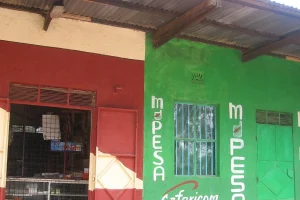
Safaricom offers three main ways for a business to receive M-Pesa payments: Pochi la Biashara, a Buy Goods till, and a Paybill. The biggest differences are who pays the fee and how easily you can tell which customer made each payment.
If you sell on your own and informally, start with Pochi la Biashara. You can set it up in a few minutes on *334# with no paperwork. If you have a shop or counter and want customers to pay nothing, a Buy Goods till is usually better. If you need every payment matched to a specific person or invoice (such as school fees or utility bills), you need a Paybill.
How the Three Compare
| Feature | Pochi la Biashara | Buy Goods Till | Paybill |
|---|---|---|---|
| How customer pays | Lipa na M-Pesa > Pochi la Biashara + your number | Lipa na M-Pesa > Buy Goods + till number | Lipa na M-Pesa > Pay Bill + business number + account number |
| Who pays the fee | Customer (free up to KSh 200 until 31 Oct 2026) | Business (0.55%, free up to KSh 500) | Business chooses (customer, business, or shared) |
| Paperwork | None | National ID for individuals; more documents for registered businesses | Registration documents, KRA PIN, permit |
| Setup time | Minutes | About 10 minutes online for an individual | Longer than a till |
| Staff can take payments | No | Yes | Yes |
| API access (Daraja) | No | Yes | Yes |
| Identifying the payer | Name on SMS | Till statement | Account number on every payment |
Pochi la Biashara
Pochi is a second balance on your personal M-Pesa line. Business money sits separately from personal money. It was designed for people who sell alone and do not want a formal application.
Customers pay by choosing Pochi la Biashara and entering your phone number. Their confirmation shows your business name. You receive the full amount for free. You pay normal M-Pesa charges when you withdraw or send the money onward.
Until 31 October 2026 the customer fee is:
| Payment (KSh) | Customer pays |
|---|---|
| 1 to 200 | Free |
| 201 to 500 | 7 |
| 501 to 1,000 | 13 |
| 1,001 to 1,500 | 23 |
| 1,501 to 2,500 | 33 |
| 2,501 to 250,000 | 50 |
Pochi uses your personal M-Pesa limits (KSh 500,000 balance, KSh 250,000 per transaction, KSh 500,000 daily). Most small traders never hit these. The usual reason to move on is hiring staff who also need to accept payments, or wanting customers to pay zero fees at the counter.
Buy Goods Till
A till is a separate business account with its own number (the one on the green sticker). The customer selects Buy Goods and Services, enters the till number and the amount, and confirms with their PIN. There is no account number.
Paying a till is free for the customer at any amount (except at fuel stations, where customers still pay a fee). The business pays 0.55% of each payment, capped at KSh 200. From 7 August 2026, sales of KSh 500 and below carry no fee for the business.
This is the main advantage over Pochi for many shops. A KSh 3,000 payment costs the customer nothing on a till, while on Pochi it costs the customer KSh 50 (under the temporary rates).
Moving money out of a till also became cheaper from 7 August. An individual can apply for a till with a national ID (and a county permit where required). Online applications for individuals take about 10 minutes. Registered businesses need more documents and typically take about a day. You can add staff as operators so they can confirm payments.
Paybill
A Paybill requires the customer to enter two numbers: your business number and an account number. The account number is how you identify who paid. For example, a water company uses the customer’s account number, and KPLC prepaid uses the meter number.
This is the main reason to choose a Paybill over a till. A landlord with many tenants, a school collecting fees, or any business that needs automatic matching will find the account number useful. The downside is that a mistyped account number still sends the money to you, but it sits against the wrong reference until it is corrected.
The business decides who pays the fee when setting up the Paybill. It can charge the customer (up to KSh 108), absorb the fee itself, or share it. Payments of KSh 100 and below are free either way.
Signing Up
For Pochi, dial *334# on the Safaricom line, choose Pochi la Biashara, and register. You provide a business name and confirm with your PIN. It works immediately.
A till or Paybill requires an application at a Safaricom shop or online. A Paybill takes longer because Safaricom also sets up the account-number format and fee option.
Many people start with Pochi while a till application is processed. Many businesses also run both a till (for walk-in customers) and a Paybill (for invoices).
Common Questions
Do I pay tax on Pochi income?
Yes. Business income is taxable however it arrives. Your Pochi statement can serve as a record.
Can a wrong payment be reversed?
For till and Paybill payments the customer contacts Safaricom on 100. The automatic 456 SMS route is for person-to-person transfers. Pochi reversals generally require the business owner’s approval.
Do I need a bank account for a till or Paybill?
No. You can move money from a till or Paybill to a phone or another Paybill. A bank account still makes bookkeeping easier for many businesses.
That covers the main differences between Pochi, Till, and Paybill in 2026. Choose based on how your customers pay, whether you want them to pay a fee, and how you need to track who paid. Confirm the latest rates and requirements on Safaricom’s official channels.