


Get breaking business news on WhatsApp
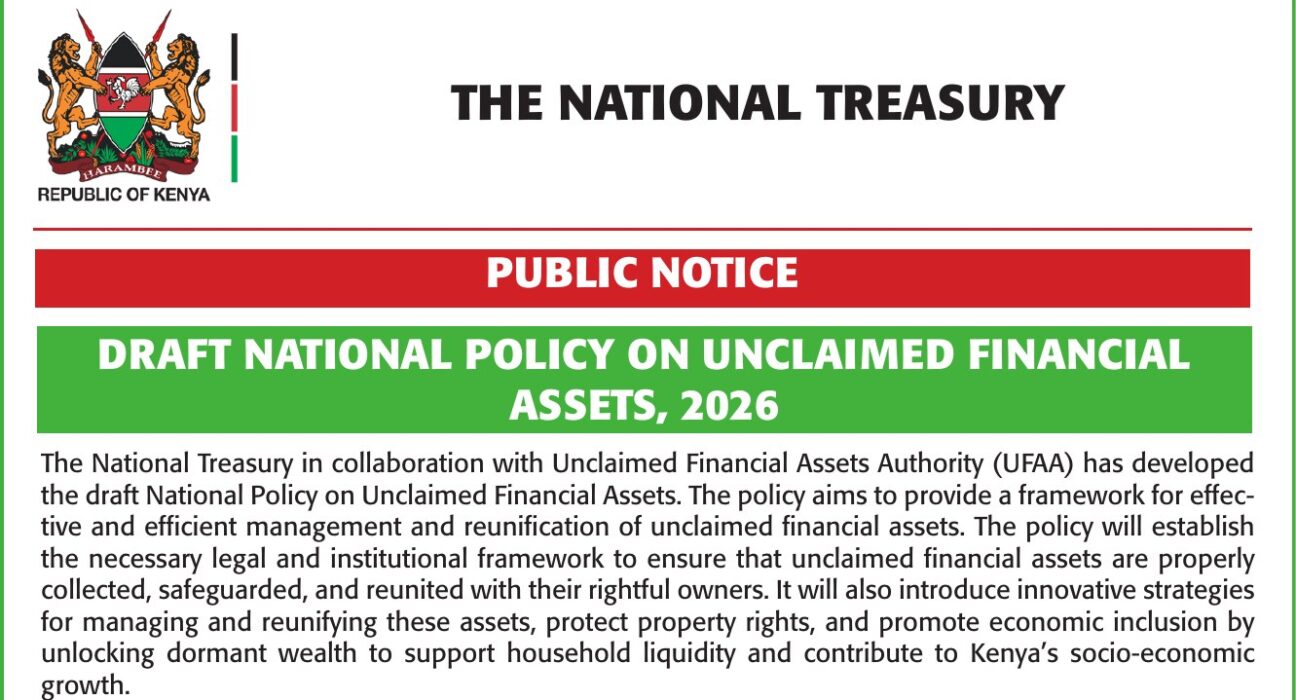
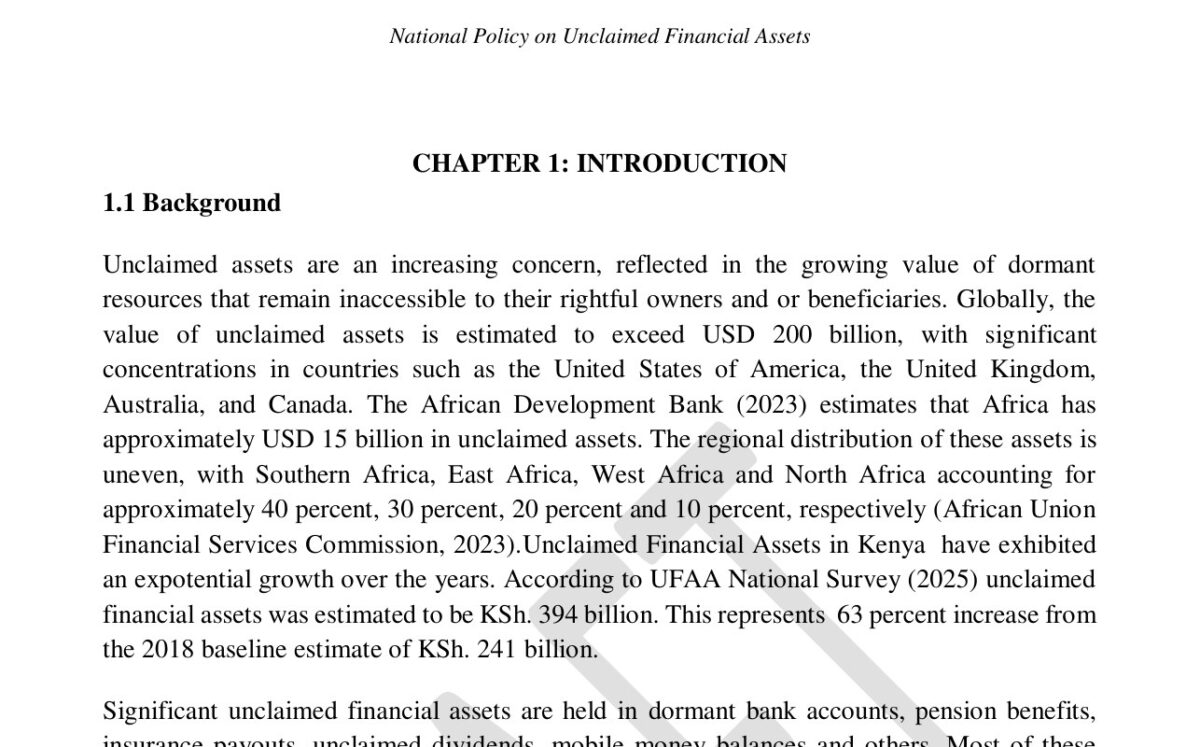
Unclaimed assets in Kenya, including dormant bank accounts, pension benefits, insurance payouts, dividends and mobile money balances, were estimated at KSh394 billion in 2025, a 63% rise from KSh241 billion in 2018. The figure is in a draft National Policy on Unclaimed Financial Assets, 2026, which the National Treasury and the Unclaimed Financial Assets Authority (UFAA) have opened for public comment.
The draft says only a small share of the money ever reaches its owners and proposes simpler claims, especially for small amounts, plus tighter reporting rules for banks, insurers and other holders.
On this page
Unclaimed assets: how much UFAA holds and returns
The draft, citing a 2025 UFAA national survey, shows a widening gap between the money out there and what has been returned:
| Measure | 2018 | 2025 |
|---|---|---|
| Estimated unclaimed assets in Kenya | KSh241bn | KSh394bn |
| Total received by UFAA | KSh13.5bn | About KSh41bn |
| Value returned to owners | KSh199m (1.5%) | KSh2.8bn (8%) |
By December 2025, KSh2.8 billion had been returned to 37,390 owners. The Fourth Medium Term Plan targets a 20% yearly reunification rate, against a global benchmark the draft puts at 30% to 40%.
Why so little money is being claimed
The draft blames gaps in the law, slow probate for deceased owners, heavy paperwork and weak data. A 2025 baseline survey found more than 18,000 possible holding institutions, but fewer than 2,000 had filed reports by December 2025. UFAA’s database lists over 10 million potential beneficiaries, yet only about 40,000 have been reunited with their assets.
Many unclaimed assets belong to people who have died, where families have not started or finished succession. Our guide on claiming unclaimed assets of a deceased person explains that process.
What the draft policy proposes
Under the draft, the government would:
- Cover all financial asset classes in law, including near-cash and digital assets, and set rules for emerging asset types.
- Introduce different claims processes for low-value claims to cut the burden on claimants.
- Strengthen enforcement of reporting and surrender duties, with standard data formats for all holders.
- Require holders to report and surrender foreign currency assets in Kenya shillings at the Central Bank of Kenya rate.
- Use existing unique identifiers and digital records to trace owners, decentralise UFAA services and digitise claims.
The policy follows a recent dispute over transfer charges, covered in our report on the KSh200 CDSC fee to move unclaimed shares to UFAA.
How to comment on the unclaimed assets policy
Written comments go to the UFAA Chief Executive Officer and Managing Trustee at Pacis Centre, Slip Road, off Waiyaki Way, Nairobi, or by email, by Friday 4 December 2026. The notice is signed by Treasury Cabinet Secretary John Mbadi.
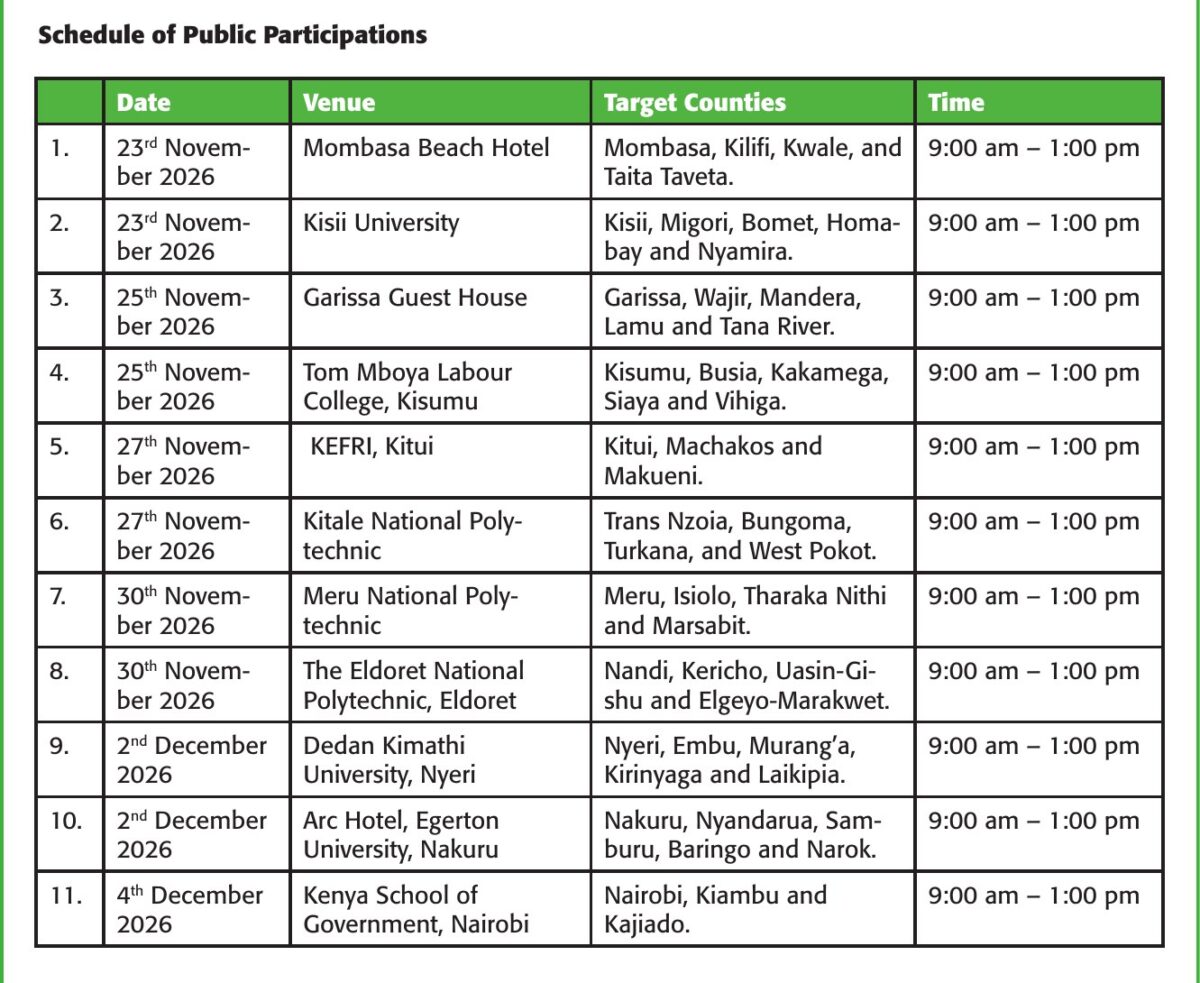
Eleven public forums run from 9am to 1pm, starting on 23 November in Mombasa and Kisii, then Garissa and Kisumu (25 November), Kitui and Kitale (27 November), Meru and Eldoret (30 November), Nyeri and Nakuru (2 December), and Nairobi at the Kenya School of Government (4 December).
Anyone who thinks they may be owed money can follow our step-by-step guide on how to check unclaimed assets with UFAA, or see how to claim unclaimed dividends.
Frequently asked questions
How much unclaimed money is there in Kenya?
A 2025 UFAA survey cited in the draft policy put unclaimed financial assets at about KSh394 billion, up from KSh241 billion in 2018.
How much has UFAA returned to owners?
About KSh2.8 billion, or 8% of the roughly KSh41 billion it had received by December 2025, paid to 37,390 owners.
What is the deadline for comments on the draft policy?
Friday 4 December 2026. Comments go to the UFAA Chief Executive Officer, and public forums run in 11 towns from 23 November to 4 December.
Is the unclaimed assets policy in force?
No. It is a draft. The Treasury and UFAA will review public comments before the policy is finalised.
Prefer WhatsApp? Follow Business Radar on WhatsApp
We will email you a weekly money and business brief. We store your email (and your name, if you give one) for that purpose, under the Kenya Data Protection Act, 2019. You can unsubscribe at any time. Privacy policy.

