


Get breaking business news on WhatsApp
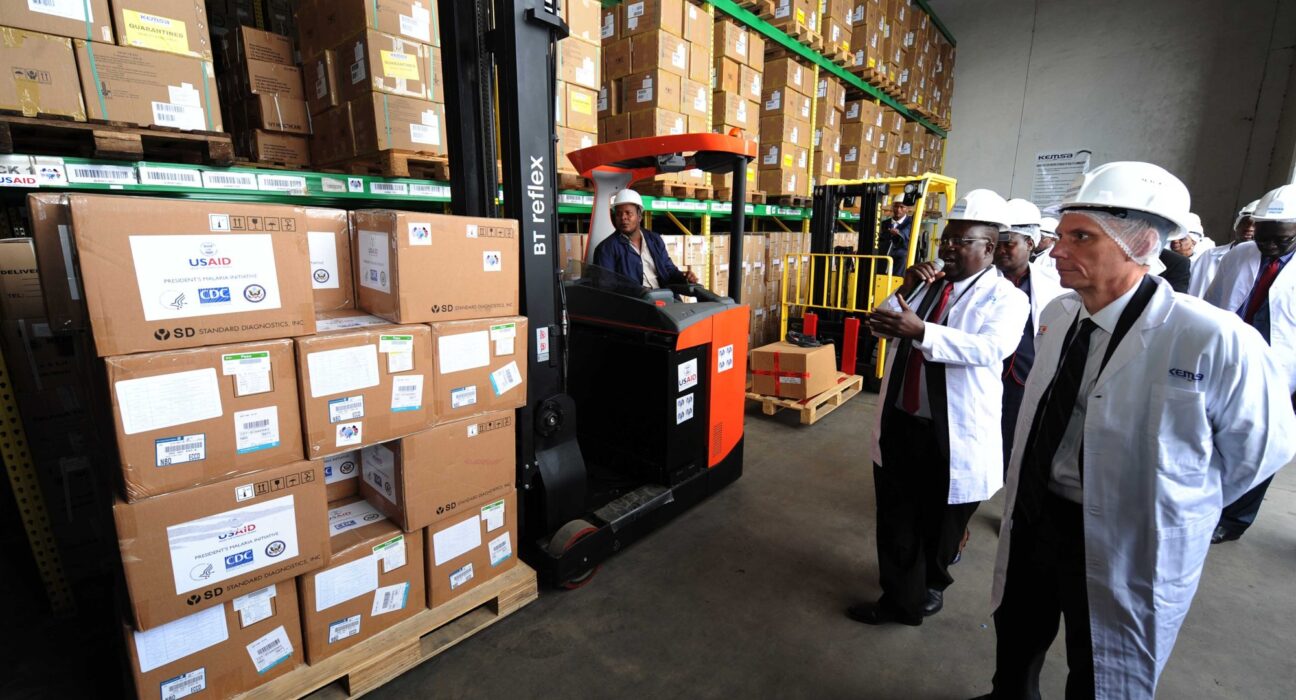
Every local and international supplier to the Kenya Medical Supplies Authority (KEMSA) must put GS1 barcodes on its products by 31 December 2026, with individual packs serialised from 1 January 2027. The rules are part of a new system to trace medicines from the factory to the patient.
“All local and international suppliers must comply with GS1 coding standards by 31 December 2026, with serialisation of individual packs from 1 January 2027, in step with the Pharmacy and Poisons Board’s traceability programme,” KEMSA chief executive Dr Waqo Ejersa said on his official X account on 16 November.
On this page
What GS1 barcodes will show
Medicines will carry GS1 DataMatrix barcodes “with product identification, batch numbers, expiry dates and unique serial numbers”, Dr Ejersa said, “so every product can be traced from manufacturer to Kemsa warehouse, health facility and ultimately the patient”.
KEMSA is also adding geo-fenced electronic locks and electronic proof of delivery, starting with supplies funded under the Kenya-US Health Cooperation Framework, and linking the system to its ERP and the National Logistics Management Information System. “This makes it impossible to divert medical supplies from their intended destinations,” he said.

Who must comply with GS1 barcodes
The Ministry of Health first set the deadline on 4 November. Pharmaceutical manufacturers “have until 31 December 2026 to comply with internationally recognised GS1 standards”, the ministry said after Medical Services Principal Secretary Dr Ouma Oluga announced it at a meeting with manufacturers and suppliers in Nairobi. Products supplied through KEMSA “will be required to meet prescribed product identification and data standards”, the ministry said.
The Pharmacy and Poisons Board (PPB) said in October that from 1 January 2027, requirements “will combine batch-level traceability with GS1-compliant unit-level serialization”. It has already begun batch declarations for locally made and imported products and built a national product catalogue with the Digital Health Agency, which leads the project.
That puts the burden on drug makers, importers and distributors. Firms new to the sector can check our guides to the pharmaceutical manufacturing licence and the list of pharmaceutical importers and distributors.
GS1 barcodes timeline
| Date | Step |
|---|---|
| 4 Nov 2026 | Ministry of Health sets 31 December deadline for manufacturers |
| 15 Nov 2026 | Partner learning centre for the national traceability system goes live |
| 16 Nov 2026 | KEMSA confirms rules for all its suppliers |
| 31 Dec 2026 | GS1 coding deadline for KEMSA suppliers |
| 1 Jan 2027 | Serialisation of individual packs begins |
A notice shared by the Pharmacy and Poisons Board on 15 November said guidelines, integration documents and onboarding requirements for the national authentication and traceability system are now online, and that the system “is API-driven and integrates with existing ERP systems”.
What the ministry wants from suppliers
Dr Oluga urged manufacturers and suppliers to name technical and business representatives to work with the ministry on product data and interoperability before the deadline. The ministry said better supply data would “enhance market visibility, support investment planning and facilitate exports”, and Dr Oluga repeated the government’s pledge of incentives and financing for local drug makers.
The ministry also tied the system to value for money under the Social Health Authority, whose recent SHA cancer care changes put drug pricing in the spotlight.
Frequently asked questions
What are GS1 barcodes?
GS1 barcodes are global standard product codes. The GS1 DataMatrix codes KEMSA requires carry the product identity, batch number, expiry date and a unique serial number for each pack.
When is the GS1 deadline for KEMSA suppliers?
All local and international suppliers must comply with GS1 coding standards by 31 December 2026, KEMSA’s CEO said. Serialisation of individual packs starts on 1 January 2027.
Does the rule apply only to KEMSA suppliers?
No. The Ministry of Health set the 31 December 2026 deadline for pharmaceutical manufacturers generally, and the Pharmacy and Poisons Board’s traceability rules from 1 January 2027 cover locally made and imported products.
Why is KEMSA introducing medicine tracking?
KEMSA says tracing every product from manufacturer to patient will stop medical supplies being diverted, with electronic locks and proof of delivery added for some consignments.
Prefer WhatsApp? Follow Business Radar on WhatsApp
We will email you a weekly money and business brief. We store your email (and your name, if you give one) for that purpose, under the Kenya Data Protection Act, 2019. You can unsubscribe at any time. Privacy policy.

