


Get breaking business news on WhatsApp
Abuse of buyer power by retailers could cost them fines of up to KSh 10 million, a five-year jail term or a penalty of up to 10% of annual turnover, the Competition Authority of Kenya (CAK) warned on 11 November 2026. In a cautionary notice signed by Director-General David K. Kemei, the regulator said its market surveillance keeps finding unfair commercial terms being imposed on suppliers in the retail sector.
The notice names the practices that worry the Authority: moving costs and risks onto suppliers, rebate demands, promotional contributions, extended payment periods and unfavourable terms in joint business plans (JBPs) between retailers and their suppliers. CAK said such conduct may contravene the Competition Act.
On this page
What CAK says counts as abuse of buyer power
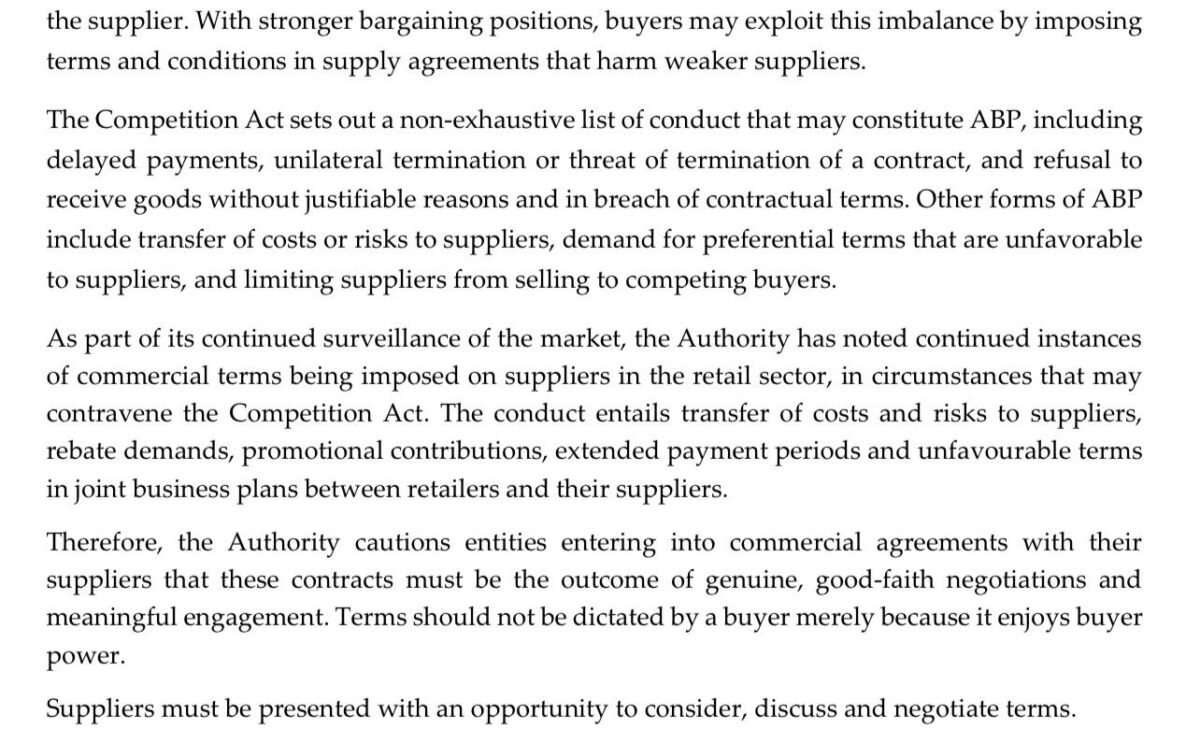
CAK defines buyer power as a buyer’s ability to obtain more favourable terms from a supplier, or to impose a disproportionate long-term cost, harm or withheld benefit on that supplier. The Competition Act sets out a non-exhaustive list of conduct that may amount to abuse of buyer power, which the notice summarises as:
- delayed payments;
- unilateral termination, or the threat of termination, of a contract;
- refusing to receive goods without justifiable reasons and in breach of contract terms;
- transferring costs or risks to suppliers;
- demanding preferential terms that are unfavourable to suppliers; and
- limiting suppliers from selling to competing buyers.
“Terms should not be dictated by a buyer merely because it enjoys buyer power,” the notice says, adding that suppliers must be given a chance to consider, discuss and negotiate terms.
Joint business plans are voluntary, CAK says
The Authority said it encourages written supply agreements but “has never issued a directive requiring suppliers in the retail sector to enter into joint business plans with buyers”. Such plans must be voluntary, and a signed agreement does not, on its own, prove that terms were fairly negotiated or that the conduct is lawful.
The warning lands in a concentrated market. Quick Mart’s IPO documents put Naivas, Quickmart and Carrefour at about 60% of supermarket sales, as we reported in our look at the big three supermarket chains. CAK’s notice does not name any retailer.
Penalties for abuse of buyer power in Kenya
| Remedy | Legal basis | Maximum |
|---|---|---|
| Criminal penalty | Section 24A(9), Competition Act | Fine of KSh 10 million, up to 5 years in jail, or both |
| Administrative penalty | Section 36, Competition Act | Up to 10% of the previous year’s gross annual turnover, among other remedies |
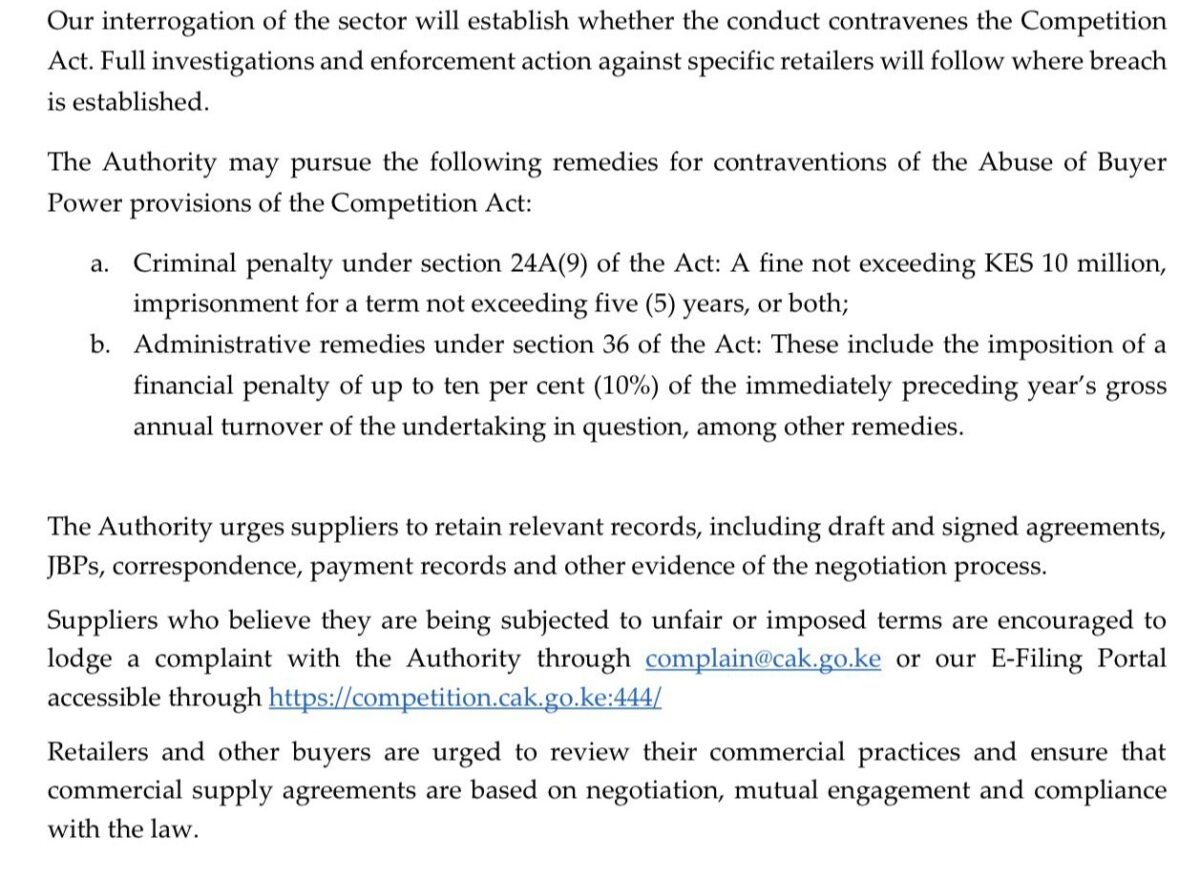
The notice describes these remedies as available for abuse of buyer power under the Competition Act. CAK said its review of the sector will establish whether the conduct breaks the law, and that “full investigations and enforcement action against specific retailers will follow where breach is established.”
What suppliers should do now
Suppliers who suspect abuse of buyer power have a clear path. The Authority urged suppliers to keep records of draft and signed agreements, JBPs, correspondence, payment records and other evidence of how terms were negotiated. Suppliers who believe they face imposed terms can lodge a complaint by email to complain@cak.go.ke or through CAK’s e-filing portal. Retailers and other buyers were told to review their commercial practices and make sure supply agreements rest on negotiation and mutual engagement.
The same regulator also clears mergers in Kenya; recent decisions include the Credinvest purchase of Rafiki Microfinance Bank and the ABC Bank takeover. For suppliers watching retail sector shifts, see the Quickmart IPO results.
Frequently asked questions
What is abuse of buyer power?
It is when a buyer uses its stronger bargaining position to impose unfair terms on a supplier, such as delayed payments, cost transfers or threats to end a contract. The Competition Act lists such conduct as a possible offence.
What fines can a retailer face for abusing buyer power?
A criminal fine of up to KSh 10 million, up to five years in jail, or both, plus an administrative penalty of up to 10% of the previous year’s gross annual turnover.
Must suppliers sign joint business plans with supermarkets?
No. CAK says it has never directed suppliers to enter joint business plans and that such plans must be voluntary.
How can a supplier complain to CAK?
By email to complain@cak.go.ke or through the Authority’s e-filing portal, keeping copies of agreements, correspondence and payment records as evidence.
Prefer WhatsApp? Follow Business Radar on WhatsApp
Weekly, free. We only use your email for this newsletter and you can unsubscribe in one click. Privacy policy.

