


Get breaking business news on WhatsApp
President William Ruto says he will be in Matuga, Kwale County, in about three weeks to break ground on Bamburi Cement’s new clinker plant, a KSh32bn ($250m) project that will more than double the company’s capacity to make the main ingredient in cement.
Ruto made the announcement on Tuesday in Ngaaie, Kitui County, where he was breaking ground on Devki Group’s KSh70bn clinker and cement plant. “In about three weeks, I will be in Matuga, Kwale County, to break ground for Bamburi Cement’s expansion, which will include a new clinker production plant with a capacity of 5,000 tonnes per day,” he said.
Two groundbreakings within a month put Kenya’s cement makers in a race to produce their own clinker, which matters for builders, hardware traders and anyone pricing a house project, because imported clinker has been one of the biggest drivers of cement costs.
What the Matuga plant will add
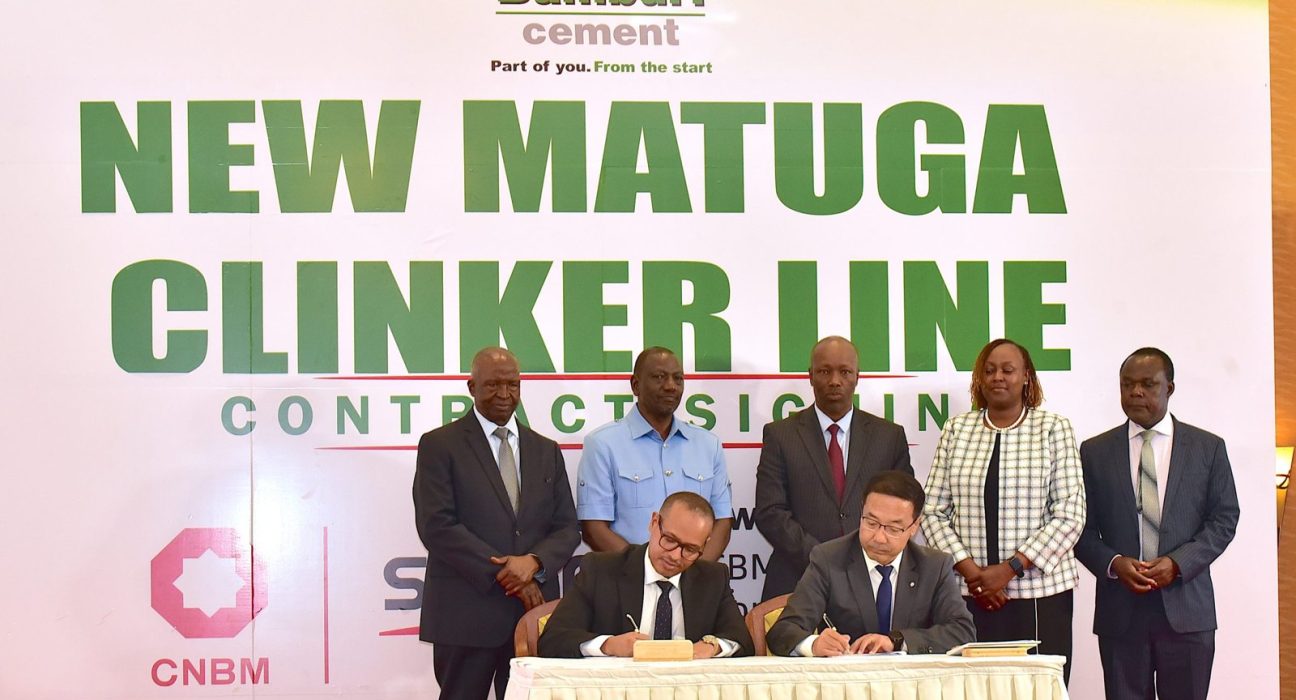
Bamburi signed a turnkey engineering, procurement and construction contract for the plant with China’s Sinoma CBMI Construction in December 2025, at a ceremony attended by Ruto. According to the company, the new line will produce 1.6 million tonnes of clinker a year.
That would lift Bamburi’s clinker capacity from 1 million tonnes to 2.6 million tonnes a year, and its cement capacity from 1.8 million tonnes to 4 million tonnes. The plant will use a six-stage precalciner system and is designed to burn alternative fuels, including coconut husks, cashew shells and municipal solid waste, to cut emissions.
At the signing, then chief executive Mohit Kapoor said the line “will greatly reduce reliance on imported clinker”, saving foreign exchange, stabilising prices and securing supply for the local market.
Amsons puts money behind the coast
Bamburi is now part of Tanzania’s Amsons Group, which took control of the company after a 2024 takeover contest that included a KSh25.4bn counter bid from Savannah Clinker. Amsons managing director Edha Nahdi said in December that the plant was the group “putting its money where its mouth is” to support Ruto’s infrastructure plans for roads, rail, ports and pipelines, all of which depend on cement and concrete.
Amsons has been expanding across the region’s industrial and energy sectors, including its deal to buy Oryx Energies’ Tanzania fuel business.
Why local clinker is the new battleground
Kenya charges a 17.5% investment promotion levy on imported clinker, and Ruto has ruled out scrapping it. That favours producers that can make their own. Devki’s Kitui plant, due to start in mid-2027, follows the group’s clinker plant in West Pokot, and Devki has also announced a cement plant in Nyeri, where traders expect prices to fall by about 10%.
With Bamburi adding 1.6 million tonnes of clinker at the coast and Devki building in Kitui, more of the cement used in housing, roads and the affordable housing programme should be made from Kenyan clinker. For contractors, the test will be whether the extra supply shows up as lower prices per bag once the plants are running. You can read more about the man behind Devki in our profile of Devki Steel Mills’ billionaire owner.
Ruto did not give an exact date for the Matuga ceremony, and Bamburi has not said when the new line will start production.
Prefer WhatsApp? Follow Business Radar on WhatsApp
Weekly, free. We only use your email for this newsletter and you can unsubscribe in one click. Privacy policy.

