


Get breaking business news on WhatsApp
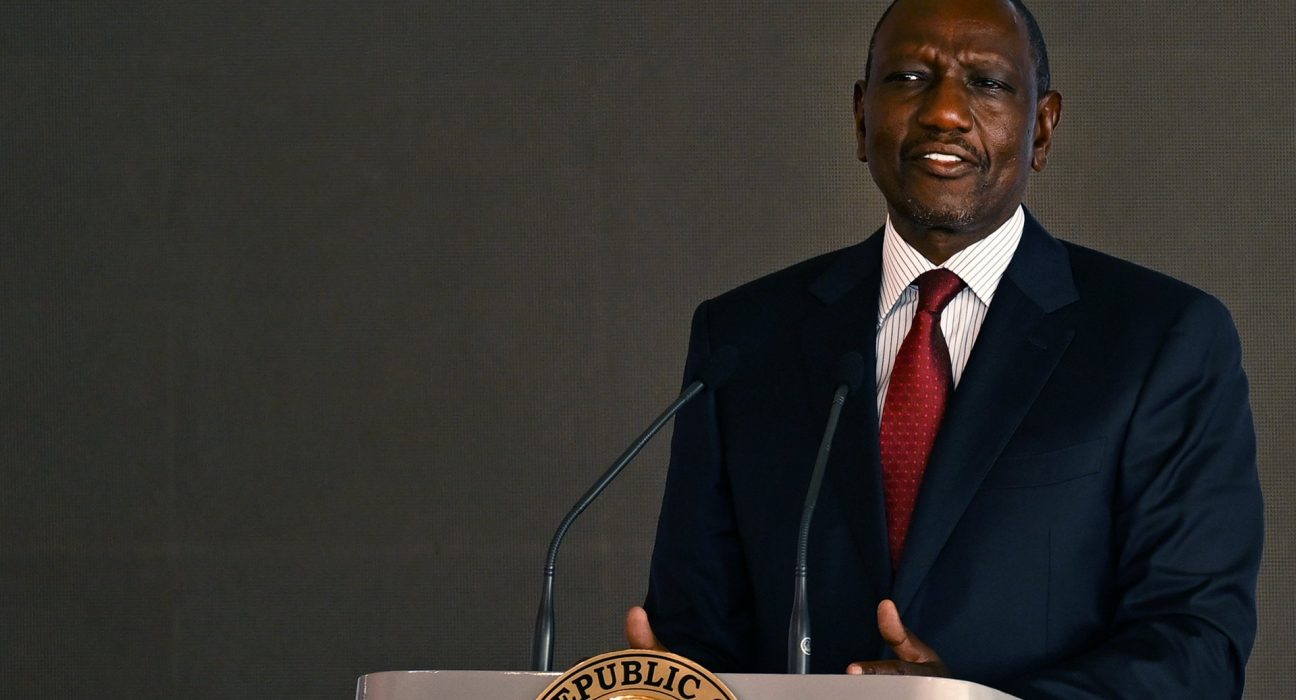
President William Ruto on Sunday defended the sale of nearly a quarter of Kenya Pipeline Company (KPC) to Nigerian industrialist Aliko Dangote, saying the government would not sell the pipeline operator’s shares cheaply so that brokers could resell them at a profit.
His remarks come as the stake his critics call a giveaway has risen in value. Dangote’s group paid about KSh42.5bn for roughly 4.5 billion KPC shares, or 24.76% of the company. At Friday’s record close of KSh10.75 a share, that block is worth about KSh48.4bn, a paper gain of about KSh5.9bn in under a week.
What Ruto said in Mwingi
Speaking at a church service at AIC Kasina in Mwingi, Kitui County, Ruto said Kenyans would get “the true value” of the shares the state sells. “There is no way we are going to undersell Kenya Pipeline shares to benefit a few brokers and shylocks. We will sell it for the best price,” he said.
He said some of the people now attacking the deal had argued during the IPO that the KSh9 offer price was too high and should have been KSh5. In his view, a lower price would have let middlemen buy cheaply from the government and later sell to an investor like Dangote at a premium. He compared this with Kenya Power, where he claimed some investors bought shares at KSh2 and were now selling them at KSh19, and said such deals would not happen with KPC while he is President.
Ruto directed part of his remarks at Kiharu MP Ndindi Nyoro, leader of the People’s Party of Kenya, who has led criticism of the transaction. Treasury Cabinet Secretary John Mbadi had already told leaders to stop attacking the purchase, describing it as a transparent market deal.
What critics are asking
Nyoro has questioned why state-backed institutions, including the National Social Security Fund and the Unclaimed Financial Assets Authority, bought heavily into the IPO and then sold a large block to a private buyer months later. He says the sellers bought at KSh9 and exited at between KSh9.02 and KSh9.36 a share, which he argues left pension savers with little reward for the risk once costs are counted.
He has also alleged, without producing documents, that the sale is a first step towards Dangote taking 51% or more of KPC, possibly through a future rights issue the government might not take up. He wants the shareholding of the planned Dangote refinery in Lamu and the investment agreement behind it made public. The government has rejected claims of impropriety.
Who owns KPC now
The Treasury sold 65% of KPC in an offer that ran from January to February at KSh9 a share, as we reported when the Kenya Pipeline IPO opened. The shares began trading on the Nairobi Securities Exchange on March 9. Dangote’s block changed hands on October 19, and he confirmed the purchase two days later in London.
After the sale, the government holds 35% of KPC, Dangote’s group 24.76% and Uganda National Oil Company 20.15%, with the rest held by other investors. KPC runs the pipeline network that carries fuel from Mombasa inland and on to Uganda and neighbouring markets, which is why the deal matters for the 700,000-barrel-a-day refinery Dangote broke ground on in Lamu on September 30.
What it means for shareholders
Retail investors who bought in the IPO at KSh9 are sitting on a gain of about 19% at Friday’s price, after the stock jumped 18.65% in two sessions to a record KSh10.75. Anyone weighing whether to buy now should note that much of that rise followed news of the Dangote stake, and the political row could keep the price volatile. Our guide on how to buy shares on the NSE explains CDS accounts, brokers and fees.
Prefer WhatsApp? Follow Business Radar on WhatsApp
Weekly, free. We only use your email for this newsletter and you can unsubscribe in one click. Privacy policy.

