


Get breaking business news on WhatsApp
WWF-Kenya says its programme spending has grown from slightly over KSh600 million in its 2017 financial year to KSh1.6 billion in the year to 2026, and that it now plans to raise more of its money from Kenyan companies, foundations and wealthy individuals as foreign aid shrinks.
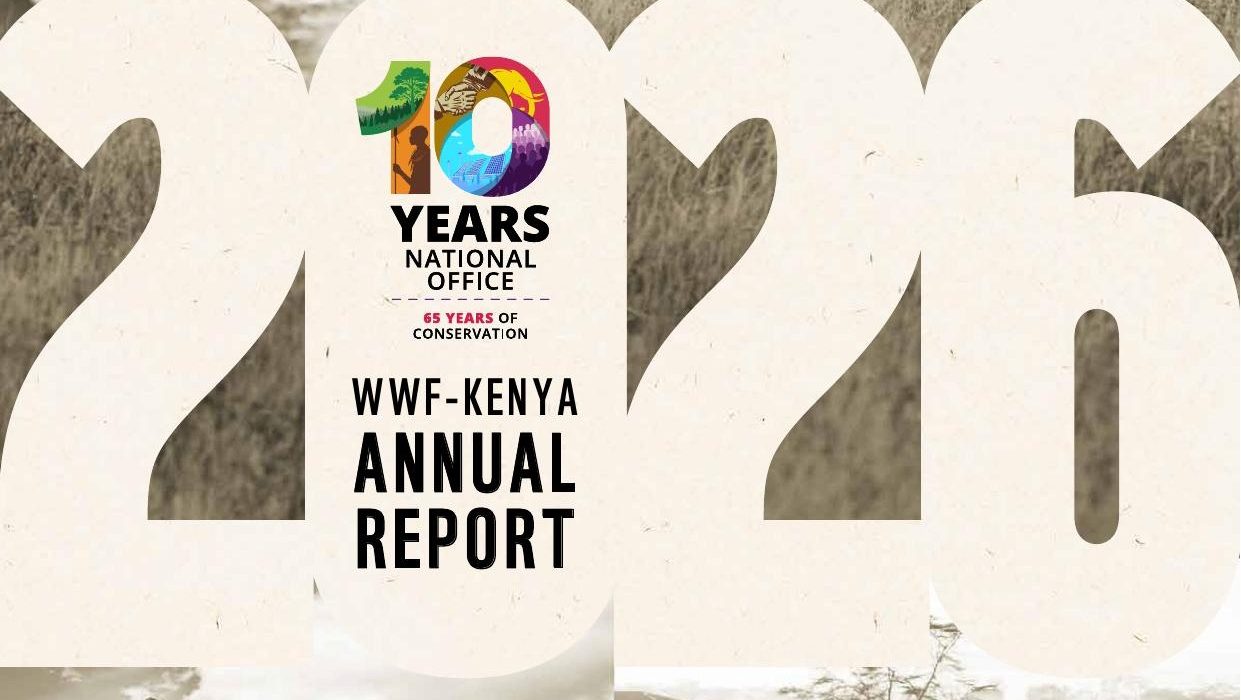
The figures are in the conservation group’s 2026 annual report, which it released on Monday as it marks ten years as an autonomous national office within the global WWF network.
A shift away from donor money
In his message, board chairman Isaac Awuondo wrote that “international development finance is shrinking and donor priorities are shifting.” For an organisation “that has historically depended on public-sector partnerships and WWF Network funding,” he said, “our conservation ambition must rest on a more resilient, diversified funding model.”
The board is steering the organisation towards “Kenya’s private sector, trusts and foundations, high-net-worth individuals and the wider public,” Awuondo said. “This is about more than diversifying revenue. It is about deepening local ownership of conservation.”
Chief executive Jackson Kiplagat made the same point, saying geopolitical instability and shifting global priorities “are straining traditional conservation financing” and that the next decade “must therefore open new pathways for funding.”
The report says WWF-Kenya has received consecutive unqualified audit opinions. It also notes the organisation’s move to the Public Benefit Organizations framework, which the board said it welcomed “for its emphasis on transparency, accountability and public benefit.”
KCB agreement
The push for local money already has one bank partner. KCB Group said on Saturday it had signed a memorandum of understanding with WWF-Kenya to “unlock investment opportunities, strengthen nature-based enterprises, protect ecosystems and support resilient livelihoods.”
In the same thread, KCB said it has extended KSh187 billion in green loans since 2022, provided KSh12.5 billion in concessional climate finance to Kenyan businesses and set up a KSh300 billion Sustainability Bond Framework for green, blue and social projects. Quoting remarks delivered at WWF-Kenya’s 10th anniversary event, the lender said: “Nature is a critical infrastructure, yet for a long time, its value had not been reflected in financial decision-making.”
Work with banks
The annual report sets out WWF-Kenya’s work with the Kenya Bankers Association, which it says produced a green finance study that “identified a KES 87 billion investment opportunity in agriculture, transport, and manufacturing” and a follow-up that found KSh100 billion to KSh150 billion in nature-positive financing opportunities. It says a climate disclosure template it co-developed with the KBA is now used widely enough “that 83% of Kenyan banks have integrated climate risk into their operations.” The KBA has also worked with PwC on the banking sector’s tax contribution.
The report says 30 banks attended the first training on the Taskforce on Nature-related Financial Disclosures framework, with Absa Bank and National Bank among early adopters, and that WWF-Kenya produced case studies with KCB Bank and EABL on how to fold nature risk into governance and lending.
Results for FY26
For the year, WWF-Kenya says it brought about 96,985 hectares under restoration and improved management and directly reached 152,323 people. Community enterprises it backs, from beekeeping to ecotourism, generated KSh80.78 million in direct income, and 1,618 tonnes of waste were recycled through its coastal plastics value chain. It says it helped leverage US$130.08 million in sustainable investments during the year.
Since 2020, the report says, the organisation has helped bring more than 278,000 hectares under effective management, and its beneficiaries have earned a cumulative KSh606 million.
The report also records that Kenya had zero black rhino poaching in 2025 for the first time since 2020, while 32 elephants were illegally killed in WWF-Kenya’s priority landscapes and 78 nationally.
Prefer WhatsApp? Follow Business Radar on WhatsApp
We will email you a weekly money and business brief. We store your email (and your name, if you give one) for that purpose, under the Kenya Data Protection Act, 2019. You can unsubscribe at any time. Privacy policy.

