Updated 19 October 2026
Quick answer: Fuliza is cheaper when you repay within a few days, because you pay a 1% access fee plus a small daily fee only for the days the balance stays unpaid. M-Shwari charges a fixed 7.5% facility fee plus excise duty (about 9% in total) whatever day you repay, so it wins when you need the money for most of a month and the amount is between roughly KSh 500 and KSh 5,000. For large balances above KSh 10,000, Fuliza can stay cheaper even for a full month because its daily fee stops rising at KSh 30.
All the figures below come from Safaricom’s published Fuliza tariff and its M-Shwari product page, checked in October 2026. Both products are offered on M-Pesa by banks: M-Shwari by NCBA Bank, and Fuliza by NCBA and KCB.
In this guide
How Each Product Charges You
Fuliza: an access fee plus a daily fee
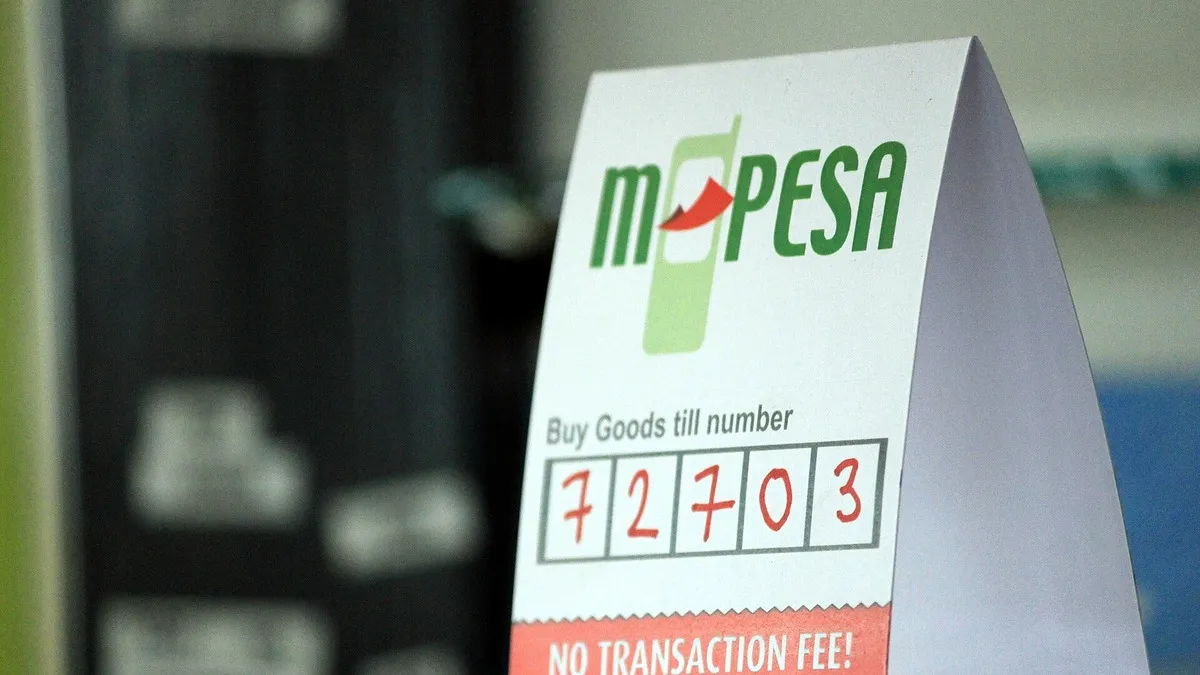
Fuliza is an overdraft. When your M-Pesa balance is too low to finish a payment, Fuliza covers the gap. Safaricom charges a one-off access fee of 1% of the amount you use, then a daily maintenance fee on whatever is still outstanding, applied from midnight the next day. Excise duty of 20% is added to the daily fee. Safaricom’s restructured tariff, in force since 1 October 2022, gives small balances three free days.
| Outstanding Fuliza balance (KSh) | Daily fee (KSh) | 20% excise (KSh) | Total per day (KSh) |
|---|---|---|---|
| 1 to 100 | 0 | 0 | 0 |
| 101 to 500 | 2.50 after 3 free days | 0.50 | 3.00 |
| 501 to 1,000 | 5.00 after 3 free days | 1.00 | 6.00 |
| 1,001 to 1,500 | 18.00 | 3.60 | 21.60 |
| 1,501 to 2,500 | 20.00 | 4.00 | 24.00 |
| 2,501 to 70,000 | 25.00 | 5.00 | 30.00 |
Source: Safaricom Fuliza tariff page and Fuliza FAQs, October 2026.
M-Shwari: one fixed fee for 30 days
M-Shwari is a short loan with a one-month repayment period. Safaricom’s M-Shwari page says loans are charged at 9%, made up of a 7.5% loan fee and 1.5% excise duty (which is 20% of the 7.5% fee). The excise is deducted from the money sent to your M-Pesa, and the 7.5% fee is added to what you repay. On KSh 1,000 you receive KSh 985 and repay KSh 1,075, a total cost of KSh 90.
The key difference: paying an M-Shwari loan back after three days does not cut the fee. Paying Fuliza back after three days does.
Side-by-Side Comparison
| Feature | Fuliza M-Pesa | M-Shwari loan |
|---|---|---|
| Type | Overdraft on M-Pesa payments | Short-term loan sent to M-Pesa |
| Provider | NCBA Bank and KCB Bank | NCBA Bank |
| Upfront cost | 1% access fee | 1.5% excise taken from the payout |
| Ongoing cost | Daily fee of KSh 0 to KSh 30 including excise | None; 7.5% fee added to the repayment |
| Repayment | Any incoming M-Pesa money clears it automatically | Within 30 days, from M-Pesa or M-Shwari |
| Limits | Personal limit; M-Pesa transaction limits of KSh 1 to KSh 70,000 apply | Safaricom lists limits from KSh 100 up to KSh 50,000 |
| Where to check | Dial *334# for your outstanding balance | M-Pesa menu, Loans and Savings, M-Shwari |
What You Actually Pay: Worked Examples
These totals use the published tariffs and assume the balance stays the same until you clear it in one go. For Fuliza, a balance repaid after a given number of days attracts that many daily charges, minus the three free days where they apply.
| Amount | Fuliza, repaid in 3 days | Fuliza, 7 days | Fuliza, 30 days | M-Shwari, any day up to 30 |
|---|---|---|---|---|
| KSh 500 | KSh 5 | KSh 17 | KSh 86 | KSh 45 |
| KSh 1,000 | KSh 10 | KSh 34 | KSh 172 | KSh 90 |
| KSh 2,000 | KSh 92 | KSh 188 | KSh 740 | KSh 180 |
| KSh 5,000 | KSh 140 | KSh 260 | KSh 950 | KSh 450 |
| KSh 10,000 | KSh 190 | KSh 310 | KSh 1,000 | KSh 900 |
| KSh 20,000 | KSh 290 | KSh 410 | KSh 1,100 | KSh 1,800 |
Here is how one line works. Fuliza KSh 5,000 for 7 days: access fee KSh 50, plus 7 days at KSh 30, which is KSh 210, for a total of KSh 260. The same KSh 5,000 on M-Shwari costs KSh 375 in fees plus KSh 75 excise, KSh 450, whether you repay on day 2 or day 30. You can test your own amount with our Fuliza charges calculator or compare several lenders at once with the loan app cost checker.
The Break-Even Point
Working from the same tariffs, Fuliza stops being the cheaper option after roughly:
- KSh 500 or KSh 1,000: about 16 days, thanks to the three free days and the low daily fee.
- KSh 2,000: about 6 days, because this band pays KSh 24 a day from the first night.
- KSh 5,000: about 13 days.
- KSh 10,000: about 26 days.
- KSh 20,000 and above: Fuliza stays cheaper for the whole 30 days, because the daily fee is capped at KSh 30 while M-Shwari’s fee keeps growing with the loan size.
The middle band is the trap. A KSh 1,500 to KSh 2,500 Fuliza balance gets no free days and costs KSh 21.60 to KSh 24 every night, which is the most expensive rate relative to the amount owed.
Other Differences That Matter
Repayment happens differently
Fuliza takes repayment from the next money that lands in your M-Pesa, so a salary or a payment from a customer clears it before you can spend it. That keeps costs down but can leave you short on the day the money arrives. With M-Shwari you choose when to repay inside the 30 days.
Late payment
Fuliza has no due date as such; the daily fee simply keeps running. An M-Shwari loan that passes 30 days attracts a rollover fee, as explained in our guide to M-Shwari charges. Unpaid loans from either product can affect your future limits and your credit record, so check your CRB status if you have had problems before.
Savings
M-Shwari also works as a savings account. Safaricom says you can save from KSh 1 and earn interest of up to 6.3% a year, and a Lock Savings account keeps money aside for a period you choose. Fuliza has no savings side.
Which One Should You Use?
- A shortfall you can clear within a few days: Fuliza, especially below KSh 1,000.
- KSh 1,500 to KSh 5,000 needed until payday two or more weeks away: M-Shwari is usually cheaper.
- Large amounts for a few days: Fuliza, because the daily fee is capped.
- Anything you will need months to repay: neither. A Sacco or bank loan priced monthly on a reducing balance will cost far less; see bank vs Sacco loans.
If you are looking at other loan apps as well, confirm each one appears on the CBK list of licensed digital lenders before you share your details. For more on each product, see Fuliza charges explained, checking your Fuliza balance, how to increase your Fuliza limit, how to open an M-Shwari account and how to check your M-Shwari balance. If you are borrowing because income is short, new jobs are posted daily on JobinKenya.
Frequently Asked Questions
Is Fuliza cheaper than M-Shwari?
For short periods, yes. KSh 1,000 on Fuliza repaid in 3 days costs KSh 10, against KSh 90 on M-Shwari. Over a full month, M-Shwari is cheaper for most amounts between KSh 500 and KSh 10,000.
Does repaying M-Shwari early reduce the fee?
No. The 7.5% fee and the excise are fixed for the loan, so early repayment helps your limit but not the cost.
Why does Fuliza charge me every day?
Fuliza’s daily maintenance fee is charged on the outstanding balance from midnight after you use it. Balances up to KSh 1,000 get three free days first.
What is the most I can borrow?
Both depend on your personal limit. Fuliza runs within M-Pesa limits of up to KSh 70,000 per transaction, and Safaricom lists M-Shwari loan limits of up to KSh 50,000.
Can I use Fuliza to repay M-Shwari?
Technically yes, but borrowing from one to clear the other stacks fees on fees. It is better to repay from income and borrow only the amount you need.
Prefer WhatsApp? Follow Business Radar on WhatsApp
Weekly, free. We only use your email for this newsletter and you can unsubscribe in one click. Privacy policy.