


Get breaking business news on WhatsApp
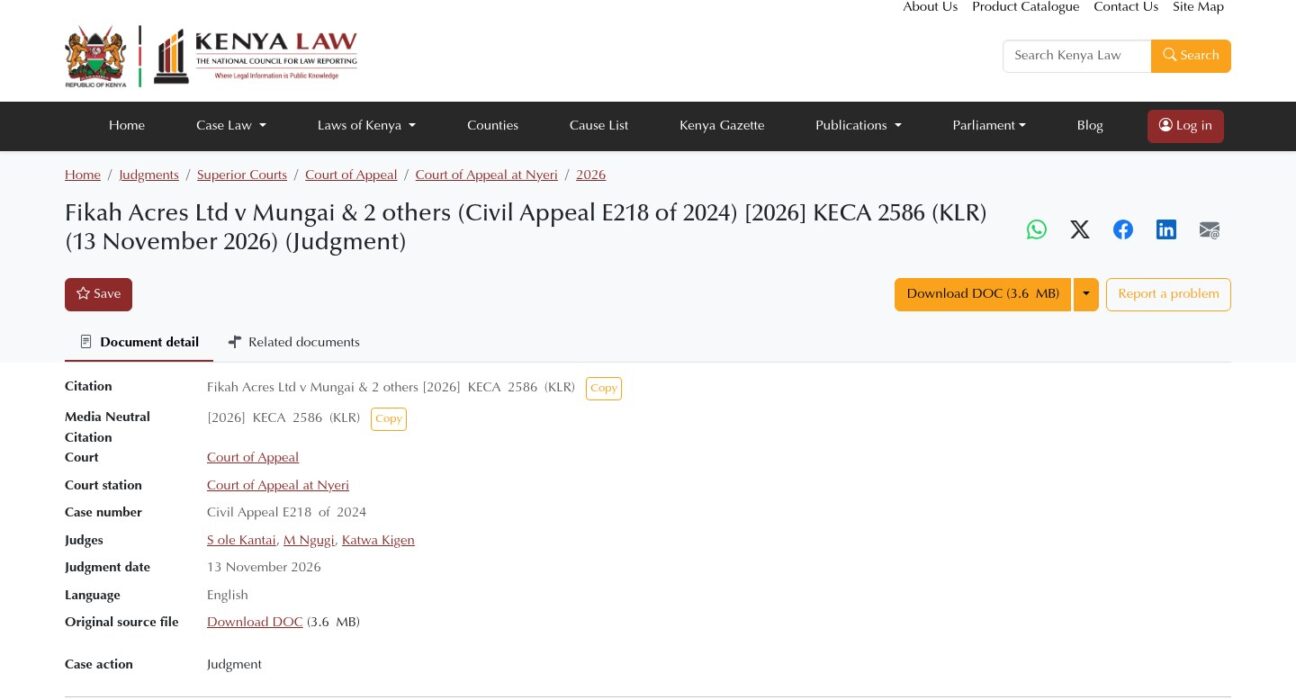
Fikah Acres Limited has lost its Court of Appeal fight to keep land it bought from Kenya Planters Co-operative Union (KPCU), now in liquidation, for KSh100 million.
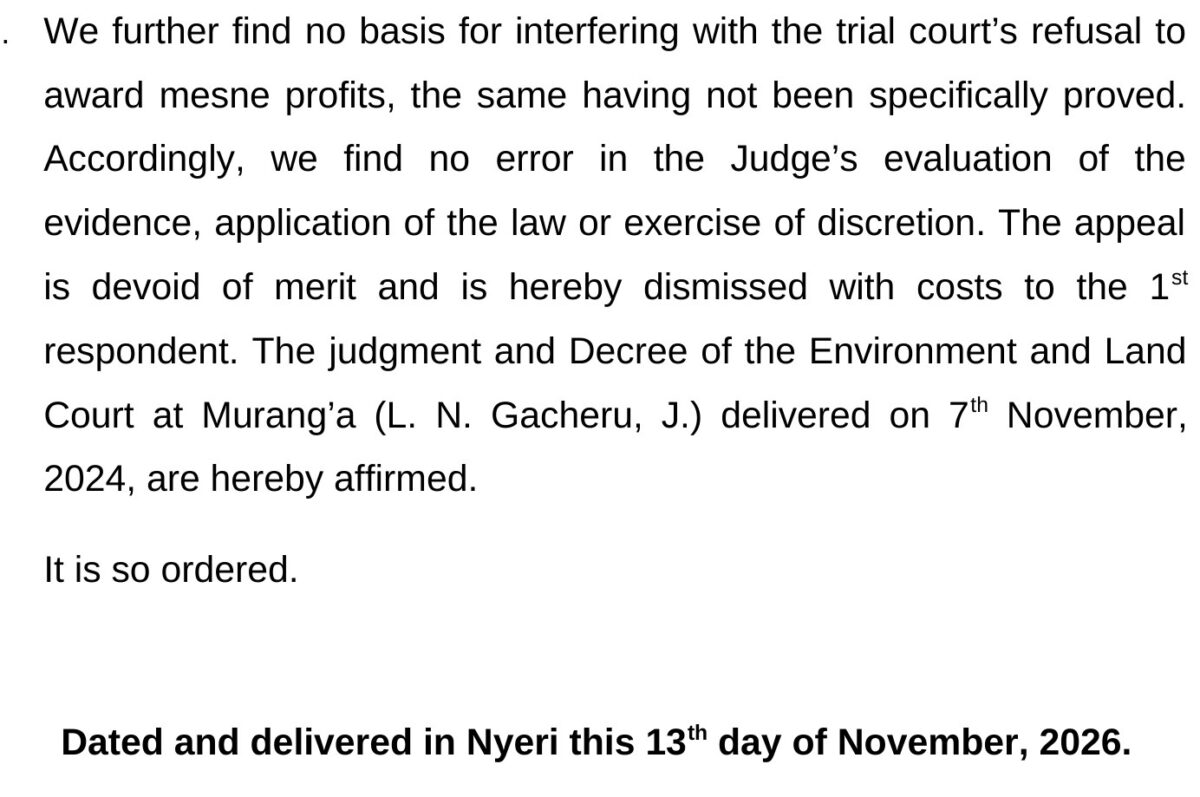
Judges S. ole Kantai, Mumbi Ngugi and Katwa Kigen dismissed the appeal on 13 November 2026 and upheld a 2024 judgment of the Environment and Land Court at Murang’a. That court had cancelled the titles, ordered eviction and found the transfers to KPCU, and then to Fikah Acres, rested on forged documents.
On this page
How the KPCU land dispute began
The landowner, Robert Kinuthia Mungai, told the court he bought L.R. No. 1363/2, about 1,238 acres with roughly 80 acres under coffee, in 1972. He borrowed from KPCU against the land, and in 1986 KPCU took over management of his coffee farm.
On 23 November 1998 the two signed an agreement to settle a debt “said to be Kshs.48 million” by transferring part of the land to KPCU. The agreement required a valuation by Tysons Limited and a survey by Thiga Survey Consortium before the acreage could be fixed. The court found neither was done.
What Fikah Acres paid
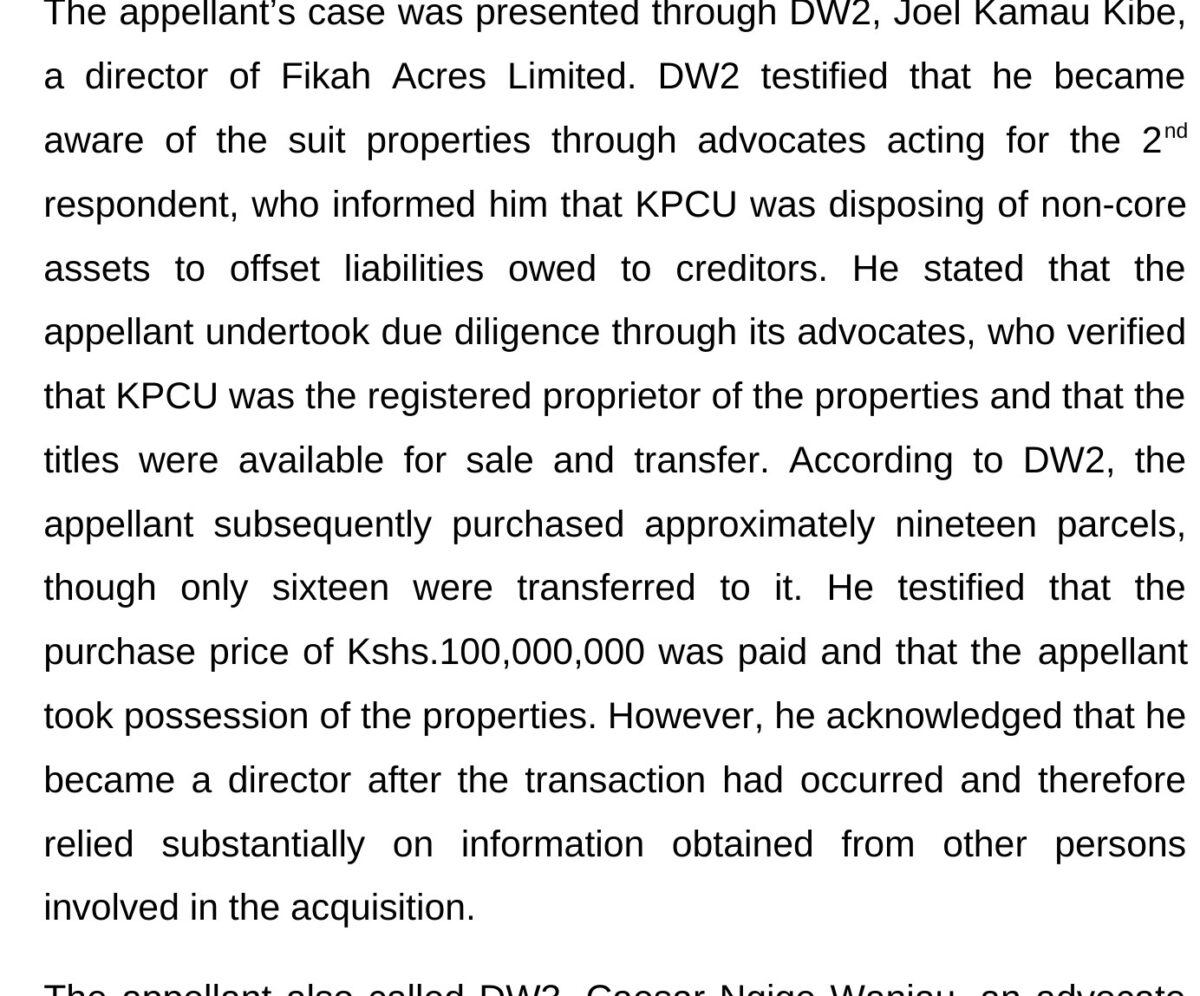
A Fikah Acres director told the court KPCU’s lawyers said the union was selling non-core assets to pay creditors. He said the company bought about 19 parcels, 16 of which were transferred to it, for KSh100,000,000, and took possession. He admitted he became a director after the deal.
The dispute covers 15 subdivisions, L.R. Nos. 1363/10 to 1363/16, 1363/22 to 1363/28 and 1363/33. A document examiner found the signatures on the 7 August 2014 transfer documents did not match the owner’s. There was also no proof of Land Control Board consent.
Why the Court of Appeal ruled against Fikah Acres
The judges agreed “that the transfer to the appellant was based on a forged agreement of 1998 and on incomplete and therefore invalid documentation at lands Registry.” They held Fikah Acres was not a bona fide purchaser, because a buyer must also prove the seller had a valid title. Once KPCU’s title fell, “the 2nd respondent could not convey to the appellant a better title than it lawfully possessed.”
Fikah Acres’ reliance on section 99 of the Land Act, which protects buyers at a chargee’s auction, failed because the sale was not an auction under a statutory power of sale.
Lessons for land buyers
The ruling shows that paying in full and taking possession does not protect a buyer if the seller’s title is defective. Buyers of land sold by co-operatives or firms in liquidation should check the full title history, consents and any court cases before paying. Start with an official land search on Ardhisasa and read our guide on how to get a title deed. In a similar case last week, a court cancelled two rival Nairobi West titles. Coffee farmers can also track coffee auction prices.
Frequently asked questions
Who won the Fikah Acres appeal?
The landowner, Robert Kinuthia Mungai. The Court of Appeal dismissed Fikah Acres’ appeal with costs on 13 November 2026 and affirmed the Murang’a court’s 2024 judgment.
How much did Fikah Acres pay for the land?
A company director testified that Fikah Acres paid KSh100,000,000 to KPCU for about 19 parcels, of which 16 were transferred to it.
Why was Fikah Acres not protected as an innocent buyer?
The court said a bona fide purchaser must show the seller held a valid title. KPCU’s title rested on forged documents, no valuation or survey and no Land Control Board consent.
Does section 99 of the Land Act help buyers?
Only buyers at a chargee’s sale under the statutory power of sale. The court found this sale came from a 1998 debt settlement agreement, not an auction.
Prefer WhatsApp? Follow Business Radar on WhatsApp
We will email you a weekly money and business brief. We store your email (and your name, if you give one) for that purpose, under the Kenya Data Protection Act, 2019. You can unsubscribe at any time. Privacy policy.

