

Get breaking business news on WhatsApp
Kenyan electric mobility firm Teketeke E-Mobility is asking the government for tax exemptions on locally assembled electric motorcycles and three-wheelers used on farms, arguing that cheaper transport would leave more money in farmers’ pockets.
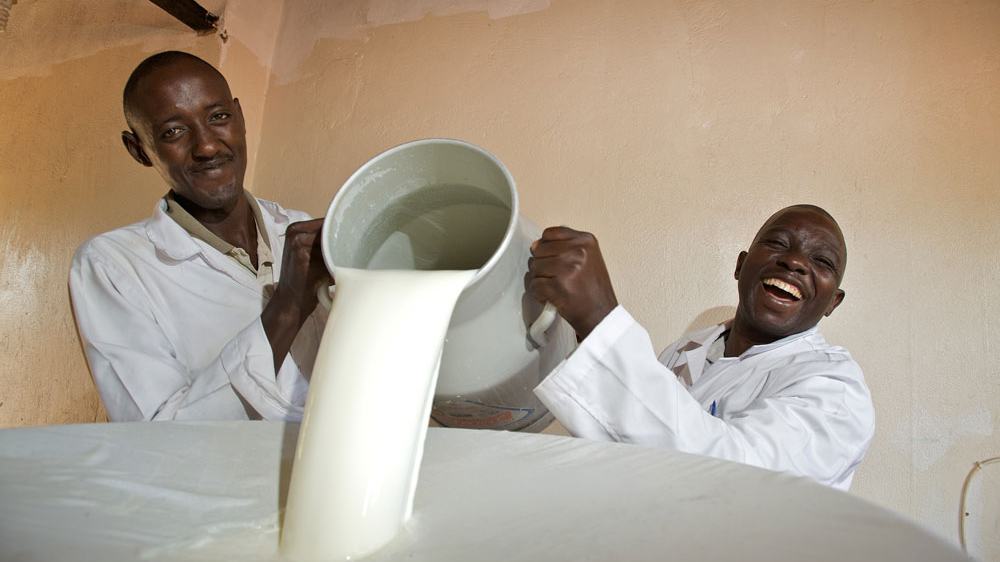
The company assembles electric motorcycles, cargo tricycles and lithium-ion batteries. Its main target is dairy and produce farmers who move milk and crops to collection centres, processors and markets, Capital FM reported on Monday, October 19.
Managing director Richard Chesebeh said the firm wants locally assembled electric farm transport to get the same kind of tax incentives already available for other agricultural machinery, which would lower the price farmers pay at purchase.
KSh1,000 a day down to KSh200, the firm says
Chesebeh said a farmer who spent about KSh1,000 a day moving milk on a petrol motorcycle now spends about KSh200 on one of the company’s electric bikes. The figures come from the company and have not been independently checked.
“Initially, the cost of production for milk was about, in terms of the transportation, using the other bikes there. A client could use about a 1,000 shillings per day, but right now we have reduced the cost, they are doing it at 200 shillings a day,” he said.
According to the company, its LHP1 motorcycle can carry up to 500 kilogrammes and covers 100 to 120 kilometres on a charge. Its electric tricycle carries 1.5 to two tonnes and has a range of up to 150 kilometres. Teketeke also converts petrol motorcycles to electric, so farmers who already own a bike do not have to replace it. The company did not disclose what a conversion costs, or what farmers should expect to pay for battery replacement and maintenance.
MPs’ agriculture committee backs a trial
John Mutunga, who chairs the National Assembly’s Departmental Committee on Agriculture and Livestock, said electric motorcycles could help dairy cooperatives cut the cost of moving milk from collection centres to processing plants. He urged organised farmer groups to look at the technology, saying it would reduce both fuel bills and emissions.
“Comparing the electric vehicles, or electric motorbikes, and electric tuk-tuks with motor vehicles, which are using petroleum, the ratio is such that it is one to five,” Mutunga said, referring to running costs. He said four units had been presented to the Ministry of Agriculture, which is considering distributing them to farmer groups.
Why the pitch lands now
The request comes days after the energy regulator raised pump prices for the October 15 to November 14 cycle. Diesel rose by KSh9.90 to KSh227.76 a litre in Nairobi and Super Petrol by KSh12.93 to KSh226.96. Matatu owners have since ordered a 10% fare rise and complained that promised duty relief on electric vehicles, batteries and charging equipment has not arrived.
Transport is a large share of the cost of getting milk to market, at a time when formal milk deliveries have fallen and some supermarket shelves are running thin. Any saving on collection runs matters to cooperatives that pay farmers per litre.
Government policy already points the same way. The Ministry of Roads and Transport’s National Electric Mobility Policy proposes excise duty and VAT exemptions for electric vehicle parts, lower excise duty on locally manufactured and assembled EVs, and support for local assembly plants. The 2023-2027 National Climate Change Action Plan aims for electric motorcycles to make up at least 30% of all motorcycles by 2027.
Turning those proposals into tax breaks would need Parliament to amend the tax laws. The latest changes, signed by President William Ruto on October 16, focused on excise duty for tiles, sinks and glass and on keeping VAT on fuel at 8%.
Prefer WhatsApp? Follow Business Radar on WhatsApp
Weekly, free. We only use your email for this newsletter and you can unsubscribe in one click. Privacy policy.