

Updated 20 October 2026
Quick answer: You can buy shares on the Nairobi Securities Exchange (NSE) in two ways. The traditional route is to open a CDS account through a licensed stockbroker or investment bank, fund it, and place buy orders through the broker’s app, phone or email. The newer route is Ziidi Trader in the M-Pesa app, launched by Safaricom and the NSE on 10 February 2026, which lets you buy from one share without opening a CDS account. Either way, expect total charges of roughly 2.1% per trade on orders below KSh 100,000, and you can only trade on weekdays during market hours.
This guide uses the NSE’s list of trading participants and FAQs, the CDSC fee schedule, a licensed broker’s published charges, and Safaricom’s Ziidi Trader terms and FAQs. It explains how things work; it is not advice on which shares to buy.
In this guide
- Option 1: Buy Shares Through a Stockbroker (CDS Account)
- Licensed NSE Stockbrokers and Investment Banks
- Option 2: Buy Shares With Ziidi Trader on M-Pesa
- What It Costs to Buy and Sell NSE Shares
- Trading Hours and Settlement
- Example: Buying Safaricom Shares
- Dividends and Tax
- Shares, MMFs or Bills?
- Frequently Asked Questions
Option 1: Buy Shares Through a Stockbroker (CDS Account)
A CDS account is your electronic share account at the Central Depository and Settlement Corporation (CDSC). It holds your shares in your own name, in the same way a bank account holds cash. You cannot open one directly with CDSC; you open it through a Central Depository Agent, which is usually an NSE trading participant (stockbroker or investment bank) or a custodian bank.
Steps
- Pick a licensed trading participant from the NSE list (some are shown below). Check that the firm is on the NSE list and licensed by the Capital Markets Authority (CMA); our CMA register search explains how to look a firm up.
- Fill in the account opening form, online or at the office. Brokers generally ask for your national ID or passport, KRA PIN, a passport photo or selfie, contact details and bank or M-Pesa details for paying out sale proceeds and dividends.
- Receive your CDS account number. App-based brokers can do this within a day; paper applications can take a few working days.
- Fund your trading account through the broker’s M-Pesa paybill or a bank transfer.
- Place a buy order: the company’s ticker (for example SCOM for Safaricom), the number of shares and your price limit.
- Check the contract note the broker sends after the trade. It shows the price, the number of shares and every fee charged.
Licensed NSE Stockbrokers and Investment Banks
These are some of the trading participants on the NSE’s official list, with the contacts the NSE publishes. It is not a ranking.
| Firm | NSE code | Location | Phone | |
|---|---|---|---|---|
| Dyer & Blair Investment Bank | B02 | Goodman Tower, 7th Floor | 0709 930 000 | shares@dyerandblair.com |
| Faida Investment Bank | B17 | Crawford Business Park, State House Road | 020 7606026 | info@fib.co.ke |
| Standard Investment Bank | B20 | JKUAT Building, 16th Floor, Kenyatta Avenue | 020 2277 000 | clientservices@sib.co.ke |
| Kestrel Capital (EA) | B21 | Orbit Place, 2nd Floor, Westlands Road | 251758 / 2251893 | info@kestrelcapital.com |
| Genghis Capital | B19 | Purshottam Place, 1st Floor, Westlands Road | 0730 145 000 | info@genghis-capital.com |
| NCBA Investment Bank | B18 | NCBA Annex, 3rd Floor, Hospital Road, Upper Hill | 020 2884444 | contact@ncbagroup.com |
| Equity Investment Bank | B26 | Equity Centre, Hospital Road, Upper Hill | 020 2262477 | Not listed |
| KCB Investment Bank | Not listed | Kencom House, 2nd Floor | 0711 012 000 | Investmentbanking@kcbgroup.com |
| Absa Securities | B28 | Absa Headquarters, Waiyaki Way | 0732 130 120 | absa.kenya@absa.africa |
| SBG Securities (Stanbic) | B09 | Stanbic Centre, 58 Westlands Road | 020 3638900 | sbgs@stanbic.com |
| ABC Capital | B14 | ABC Bank House, Woodvale Grove, Westlands | 020 2246036 | customercare@abccapital.co.ke |
| Sterling Capital | B15 | Delta Corner Annex, 5th Floor, Ring Road | 0723 153 219 | info@sterlingib.com |
The full list on nse.co.ke also includes Francis Drummond, Suntra, OMS Africa, Kingdom Securities, AIB-AXYS Africa, Pergamon, Renaissance Capital, Capital A, EFG Hermes, Dry Associates, Investcent and Cinemark. Firms differ on minimum commission, account fees, app quality and how fast they pay out to M-Pesa, so ask each one before you sign up.
Option 2: Buy Shares With Ziidi Trader on M-Pesa
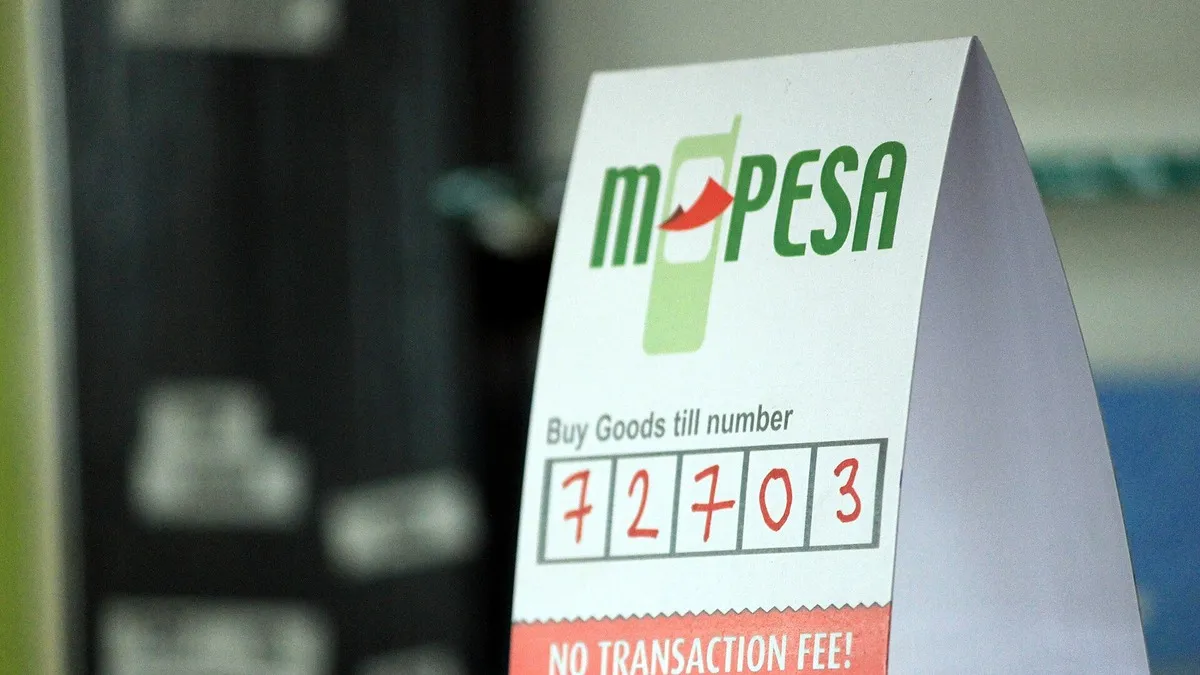
Ziidi Trader is a share-trading service inside the M-Pesa app, run under CMA oversight. Reuters reported at launch that Safaricom works with the Nairobi brokerage Kestrel Capital on it. According to Safaricom’s terms and FAQs:
- Who can use it: M-Pesa customers aged 18 or over who have been registered and active on M-Pesa for at least three months, and who complete onboarding and verification.
- How to start: open the M-Pesa app, go to Financial Services, select Ziidi Trader, accept the terms, complete verification and the risk acknowledgement, then enter your M-Pesa PIN.
- No CDS account needed: trades go through an omnibus nominee account operated by the licensed broker. You can still use Ziidi Trader if you already have a CDS account.
- Minimum: one share, plus charges.
- Limits: up to KSh 250,000 per transaction and KSh 500,000 per day, including fees.
- Fees: 1.5% brokerage commission plus the statutory levies, charged upfront. Moving money between M-Pesa and Ziidi Trader is free.
Because Ziidi Trader holds shares in a nominee account, the shares are not registered in your own name at CDSC. That is fine for most small investors, but if you want shares in your own CDS account (for example to pledge them as loan security, which CDSC charges KSh 1,000 for), use a broker. Ziidi Trader is separate from the Ziidi money market fund, which is a money market fund, not shares.
What It Costs to Buy and Sell NSE Shares
Every buy and every sell carries a commission plus levies set by regulation. This breakdown is from Faida Investment Bank’s published schedule; the CDSC levy matches CDSC’s own fee schedule.
| Charge | Trades below KSh 100,000 | Trades above KSh 100,000 |
|---|---|---|
| Brokerage commission | 1.76% | 1.50% |
| NSE transaction levy | 0.12% | 0.12% |
| CMA transaction levy | 0.12% | 0.12% |
| CDSC transaction levy | 0.08% | 0.08% |
| CDSC guarantee fund | 0.01% | 0.01% |
| CMA investor compensation fund | 0.01% | 0.01% |
| Total | about 2.1% | about 1.84% |
Business Daily has also reported a stamp duty of KSh 2 for every KSh 10,000 traded. A 2025 draft regulation proposed raising the CDSC levy from 0.08% to 0.12%; check your contract note to see whether a higher rate has taken effect.
Worked example
Say you buy shares worth KSh 10,000 through a broker. At about 2.1%, the charges come to roughly KSh 210, so you pay about KSh 10,210. When you later sell, a similar percentage comes off the sale value. That means the share price must rise by a little over 4% before a small round trip breaks even. With Ziidi Trader the commission is 1.5% instead of 1.76%, so the same KSh 10,000 purchase costs about KSh 184 in charges. Some brokers also set a minimum commission per trade, which makes very small orders relatively expensive.
Trading Hours and Settlement
- The NSE’s FAQ says trading runs from 9:00am to 3:00pm, Monday to Friday, and the market is closed on public holidays. Safaricom’s Ziidi Trader FAQ gives the trading window as 9:30am to 3:00pm, and its terms say orders sent before 9am or after 3pm are rejected until the next trading day.
- The NSE trades shares in lots as small as one share on the normal board.
- Equity trades settle three working days after the trade (T+3), so sale proceeds reach you a few days after you sell.
Example: Buying Safaricom Shares
Safaricom trades under the ticker SCOM. With a broker, you fund your account and place an order for SCOM. With Ziidi Trader, you open the service in the M-Pesa app, search for Safaricom and enter the number of shares. Either way, you become entitled to dividends only if you own the shares before the company’s book closure date. Safaricom paid KSh 2.00 per share for the year to March 2026; see our Safaricom dividend history and payment dates, and the NSE dividend calendar for other companies’ dates.
Dividends and Tax
Dividends from NSE companies are paid to the bank account or M-Pesa number on your CDS or registrar record, after withholding tax (5% for Kenyan residents). Keep your contact and payment details up to date with your broker, or dividends can go unclaimed; our guide on how to check and claim unclaimed dividends covers what to do if that has already happened.
Shares, MMFs or Bills?
Share prices move up and down, and a company can cut its dividend. Money you need within a year usually sits better in money market funds compared or Treasury bills; see how to buy Treasury bills. Shares suit money you can leave invested for several years.
Frequently Asked Questions
How much do I need to start buying shares in Kenya?
There is no fixed minimum. The NSE trades in lots of one share, so the minimum is the price of one share plus charges, although some brokers set minimum commissions.
Do I need a CDS account to buy shares?
You need one to buy through a stockbroker. Ziidi Trader on M-Pesa does not require one, because it uses the broker’s nominee account.
How much does it cost to buy shares on the NSE?
About 2.1% of the trade value for orders below KSh 100,000 and about 1.84% above that, made up of commission and statutory levies.
What time does the NSE open?
Trading runs on weekdays from 9:00am to 3:00pm, per the NSE FAQ. The market is closed on public holidays.
Can I buy shares with M-Pesa?
Yes. Use Ziidi Trader in the M-Pesa app, or fund a broker account through the broker’s M-Pesa paybill.
How do I know a stockbroker is genuine?
Check that it appears on the NSE list of trading participants and on the CMA’s register of licensees before you send money.
Last checked 19 October 2026. Fees and limits change, so confirm them on your contract note or in the Ziidi Trader terms before trading.
Prefer WhatsApp? Follow Business Radar on WhatsApp
Weekly, free. We only use your email for this newsletter and you can unsubscribe in one click. Privacy policy.