

Updated 21 October 2026
Quick answer: To start an online shop in Kenya, register your business name (KSh 950 at BRS), buy a .co.ke domain, pick a platform (a website builder, WordPress with WooCommerce, or Shopify), connect M-Pesa and card payments through a payment gateway or your own Lipa na M-Pesa till, and set up delivery through pick-up agents, couriers or your own riders. A small shop can start for a few thousand shillings a year: for example, a .co.ke domain from KSh 299 for the first year and a website builder plan with online shop tools from KSh 1,499 a month at one large Kenyan provider. The real work is product photos, clear prices and fast delivery.
Prices in this guide were read on 19 October 2026 from the providers’ own pages: Truehost for domains, hosting and its website builder, Paystack Kenya for payment fees, and the BRS fee schedule for registration. They change often, so check before you buy.
In this guide
Step 1: Get the Basics in Place
- Register the business name. check and reserve a business name on eCitizen, then register it for KSh 950 (BRS, about one day). Payment gateways and banks usually want a registered business before paying out to a business account.
- Get a KRA PIN if you do not have one, and understand which taxes apply as sales grow. VAT registration becomes compulsory at KSh 5 million of taxable sales a year; see turnover tax vs income tax vs VAT.
- Decide what you sell and how you price it, including delivery. Customers abandon carts when delivery costs appear late.
Step 2: Choose Your Shop Platform
| Option | What you pay (as listed 19 Oct 2026) | Good for | Watch out for |
|---|---|---|---|
| Website builder (Truehost Pro plan) | KSh 1,499 a month; includes shop and payment tools, 10 GB storage, 3 business emails, free .co.ke | Non-technical owners who want to launch quickly | Monthly cost adds up; check what happens to your site if you stop paying |
| WordPress + WooCommerce on shared hosting | Hosting from KSh 188 a month (Truehost WebHosting Starter, billed KSh 6,768 for 3 years); WooCommerce itself is free | Owners who want full control and many plugins | You handle updates, security and backups |
| Shopify | Paid monthly plans in US dollars; see our Shopify online store guide | Shops planning to scale with apps and themes | Dollar billing and app costs; check M-Pesa options |
| Marketplace seller account (for example Jumia) | Commission on sales, set by the marketplace | Testing demand without building a site | You do not own the customer relationship |
| Hire a designer | Truehost lists custom web design from KSh 15,600; agencies vary widely | A branded shop with less work for you | Make sure the domain and accounts are in your name |
Source line: Truehost website builder and web hosting pricing pages, read 19 October 2026. Truehost’s cheaper Hobby builder plan (KSh 136 a month) allows one online shop but has no free domain or business email; its Starter plan (KSh 999 a month) includes a free .co.ke but the shop and payment tools are listed under Pro.
You can compare plans on Truehost (affiliate link). If you want someone to build it for you, compare web design companies in Kenya, or ask an agency such as Ananke Digital (anankedigital.co.ke).
Step 3: Buy Your Domain in Your Own Name
A .co.ke domain was listed at KSh 299 for the first year on offer at Truehost, renewing at KSh 1,500 a year. Not sure which ending to pick? Read .co.ke vs .ke vs .com. Whoever builds the shop, register the domain in your own account. Our guide on how to get your domain back from a web designer shows what happens when you don’t. Add a business email address such as orders@yourshop.co.ke so customers trust your receipts.
Step 4: Take M-Pesa and Card Payments
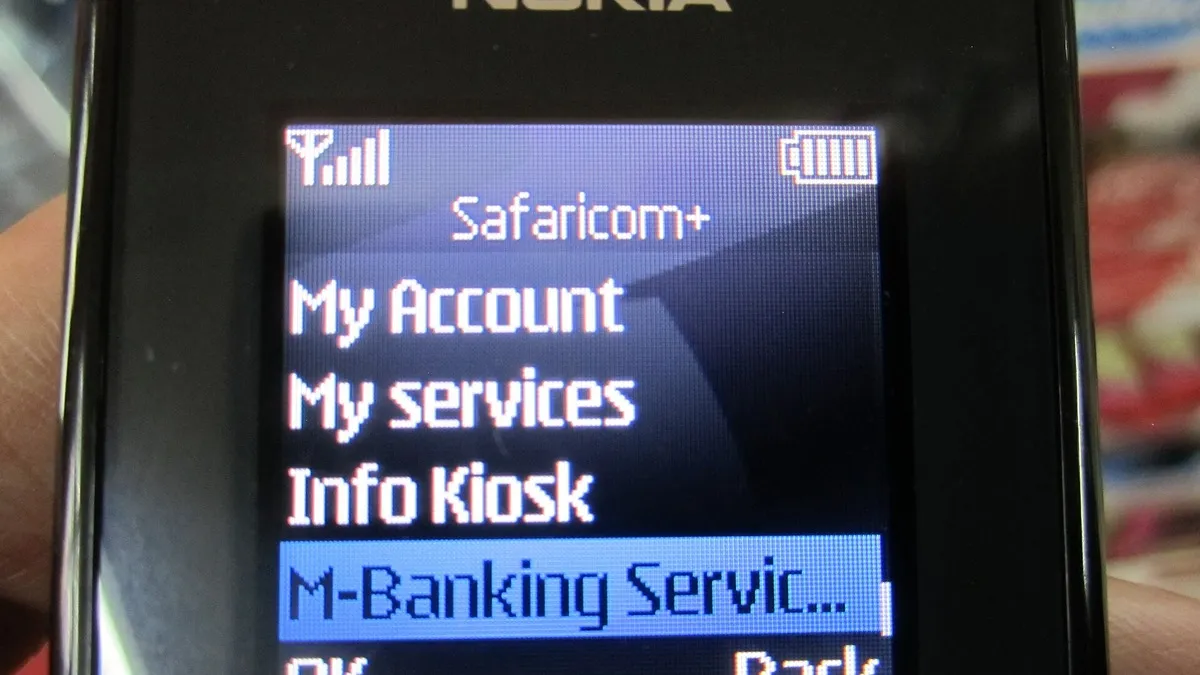
Most Kenyan shoppers expect to pay by M-Pesa. You have two main routes.
Option A: A payment gateway at checkout
A gateway puts M-Pesa and card payment inside your checkout, confirms the payment automatically and settles the money to your bank or M-Pesa. Paystack’s published Kenya pricing, read 19 October 2026:
| Payment type | Paystack fee | Fee on a KSh 2,000 order |
|---|---|---|
| M-Pesa | 1.5% | KSh 30 |
| Local card | 2.9% | KSh 58 |
| International card | 3.8% | KSh 76 |
Paystack says there is no setup or monthly fee, integration is free and money is settled two working days after payment (T+2). Withdrawals to an M-Pesa wallet cost KSh 20 to KSh 60 depending on the amount, and transfers to a bank account KSh 80 to KSh 350. Other Kenyan gateways, such as Pesapal, publish their own rates, so compare before signing up.
Option B: Your own Lipa na M-Pesa till or paybill
You can show your till or paybill number at checkout and confirm payments by hand, or connect it through a developer to Safaricom’s APIs. Under Safaricom’s Lipa na M-Pesa tariff, customers pay a Buy Goods till free in normal use, and the merchant pays nothing on collections up to KSh 500 and 0.55% (capped at KSh 200) above that. Our comparison of Pochi, till or paybill comparison explains which account suits which business. Manual confirmation works for a few orders a day; beyond that, automation saves time and stops fake “payment” screenshots.
| Item | Gateway | Own till or paybill |
|---|---|---|
| Cost on a KSh 2,000 M-Pesa order | KSh 30 (Paystack) | KSh 11 (0.55% till merchant charge) |
| Cards accepted | Yes | No |
| Automatic order confirmation | Yes | Only with an API integration |
| When you get the money | Settled T+2 | Immediately in your M-Pesa account |
Step 5: Plan Delivery and Returns
- Pick-up agent networks. Services such as Pickup Mtaani run agent points across the country, can hand parcels to matatu Saccos or couriers for upcountry orders, and offer pay on delivery with the money paid to the seller’s wallet.
- Couriers and bus parcel services for heavier or upcountry items. Ask for written rates by weight and town.
- Your own rider for same-day delivery within one town. Charge by zone and show it at checkout.
- Write a returns policy before launch: how many days, who pays return delivery and how refunds are paid. Put it on its own page and link it from checkout.
Step 6: Launch and Get Your First Orders
- Take clear photos on a plain background and write real descriptions with sizes, materials and prices in KSh.
- Place a few test orders yourself, paying by M-Pesa and card, to check the whole flow.
- Set up a Google Business Profile and share product links on WhatsApp, Instagram and TikTok.
- Reply to enquiries fast; many Kenyan buyers ask on WhatsApp before paying.
- Track which products sell and drop the ones that don’t.
Sample First-Year Budget
| Item | Builder route (KSh) | WooCommerce route (KSh) |
|---|---|---|
| Business name registration (BRS) | 950 | 950 |
| .co.ke domain, first year | Included with Pro plan | 299 (offer price) |
| Platform or hosting | 17,988 (KSh 1,499 x 12) | 6,768 for 3 years (prepaid) |
| Payment gateway setup | 0 (Paystack) | 0 (Paystack) |
| Total to start | 18,938 | 8,017 |
These figures leave out stock, photos, delivery and advertising, which are usually the bigger costs. Need staff for packing or social media? Post vacancies or find candidates on JobinKenya.
Frequently Asked Questions
How much does it cost to start an online shop in Kenya?
Using prices listed on 19 October 2026, the platform and registration basics start from about KSh 8,000 (WooCommerce on prepaid hosting) to about KSh 19,000 (a website builder with shop tools for a year), before stock and marketing.
Can I accept M-Pesa on my website?
Yes, through a payment gateway such as Paystack (1.5% per M-Pesa payment on its Kenya price list) or by connecting your own till or paybill to Safaricom’s APIs.
Do I need to register a business to sell online?
Registering a business name costs KSh 950 at BRS and is usually needed for business bank accounts and gateway payouts, so it is worth doing first.
How do online shops deliver in Kenya?
Through pick-up agent networks, couriers, bus and matatu parcel services, or their own riders, often with pay on delivery.
Last checked 19 October 2026 on truehost.co.ke, paystack.com/ke/pricing and brs.go.ke.
Prefer WhatsApp? Follow Business Radar on WhatsApp
Weekly, free. We only use your email for this newsletter and you can unsubscribe in one click. Privacy policy.