Get breaking business news on WhatsApp
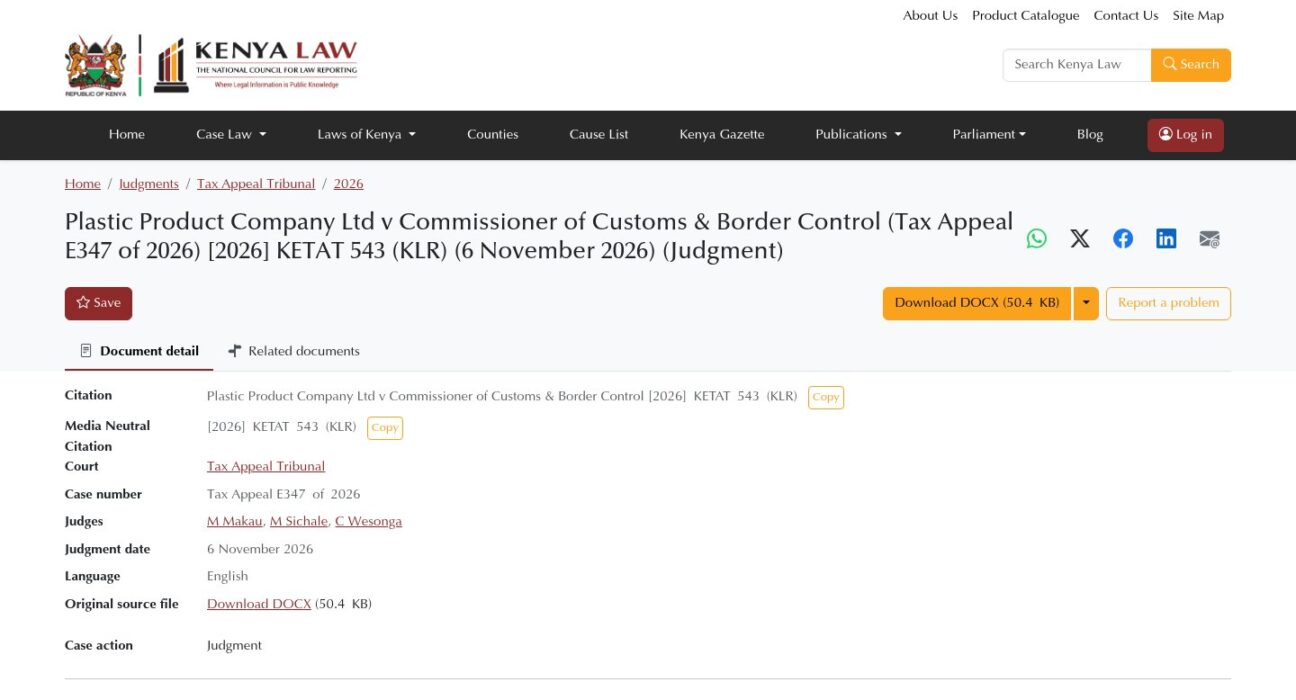
Printed in-mould labels fused into plastic containers are not advertising material, the Tax Appeals Tribunal has ruled, setting aside a Kenya Revenue Authority (KRA) demand that Plastic Product Company Ltd says came to KSh9.1 million in extra duty.
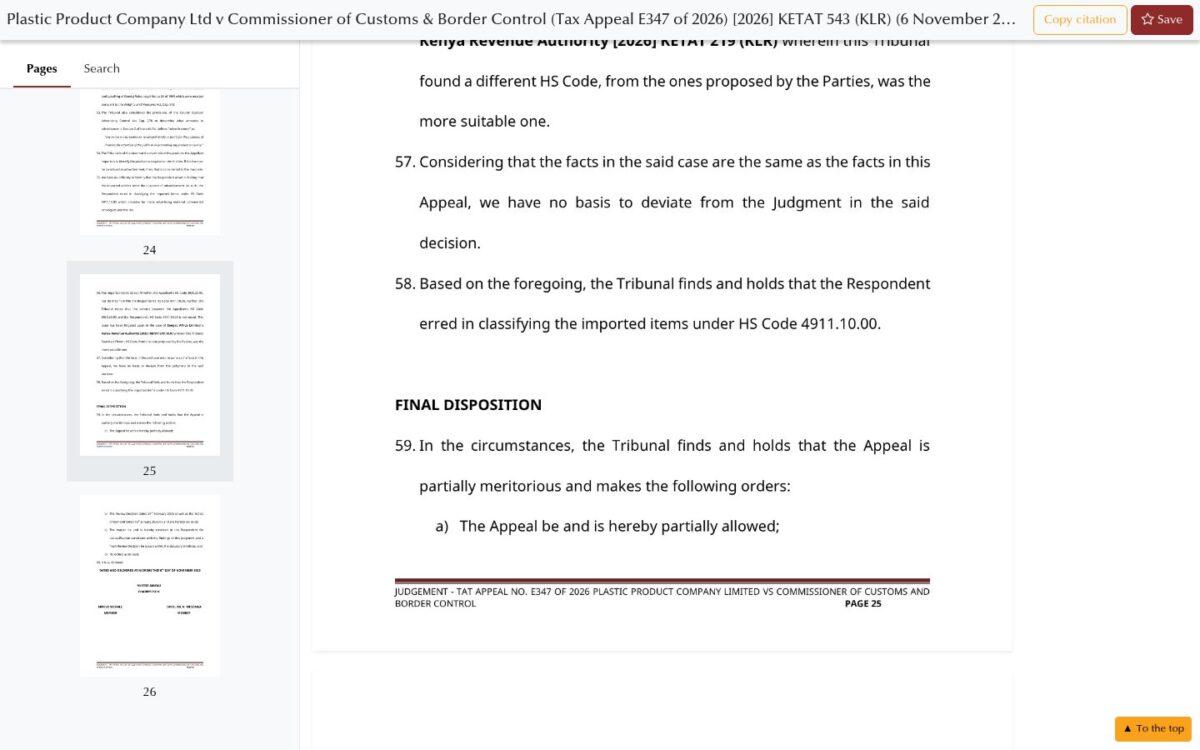
The judgment in Tax Appeal E347 of 2026, delivered on 6 November 2026 by a panel chaired by Mutiso Makau, quashed KRA’s review decision of 24 February 2026 and its demand of 16 January 2026, and sent the goods back to KRA for reclassification.
On this page
Why KRA reclassified the in-mould labels
Plastic Product Company makes plastic containers by injection moulding. It imports in-mould labels, polypropylene sheets printed and cut to shape, which are placed into the mould and fused into the container.
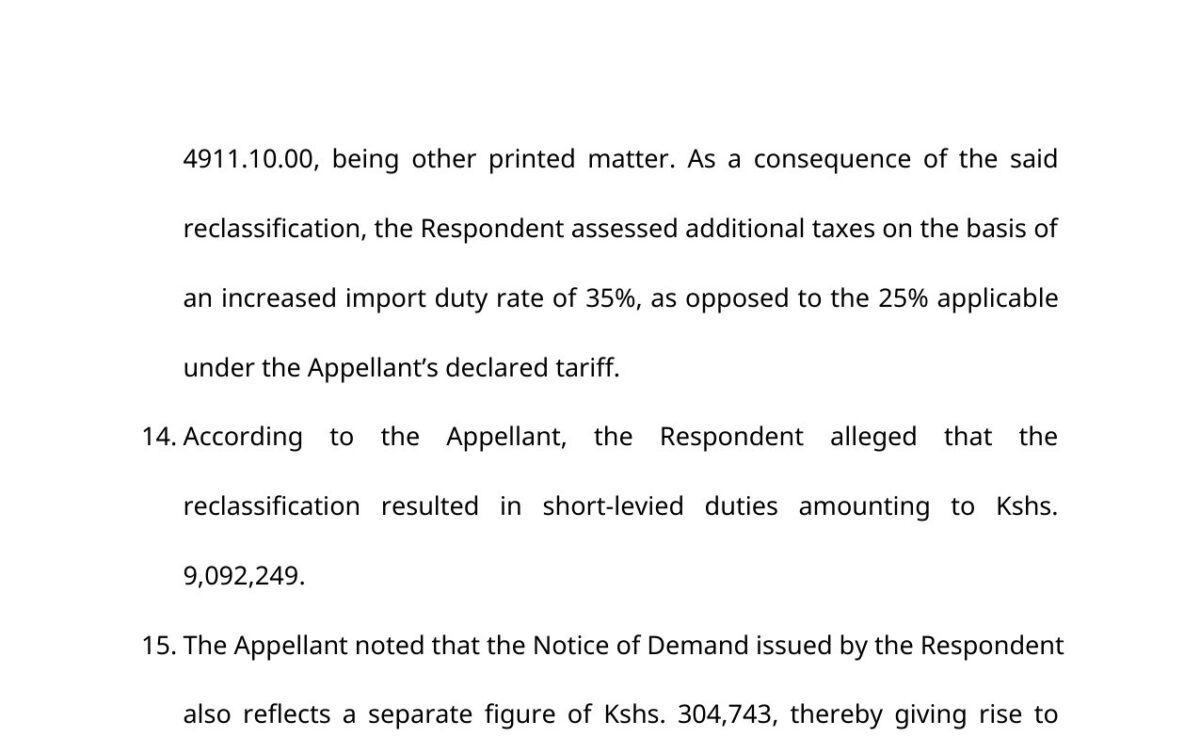
After a post-clearance audit covering 2021 to 2025, KRA moved the labels from HS code 3920.20.90 (plastic film, 25% import duty) to HS code 4911.10.00 (trade advertising material, 35% duty). The company said KRA put the short-levied duty at KSh9,092,249, while the demand also showed a separate figure of KSh304,743.
KRA argued that the labels carry the product name, volume, ingredients, nutritional values and manufacturer details, and that their main job is to convey information and promote the brand. It relied on Legal Note 2 to Section VII of the East African Community Common External Tariff, which sends printed plastics to Chapter 49 where the printing is “not merely subsidiary” to the goods’ primary use. It also cited its power under sections 235 and 236 of the EAC Customs Management Act to audit imports within five years.
What the tribunal said about in-mould labels
The tribunal accepted that printed plastics can fall into Chapter 49 of the tariff. But it said the labels’ main role is to identify the product as required by the Weights and Measures labelling rules, and “if the item can be construed as advertisement, then, that is coincidental to the main role”.
It found that the in-mould labels fit neither the company’s code nor KRA’s, and followed its earlier decision in the Sanpac Africa case, where it had picked a different HS code for similar goods. To test what counts as advertising, the panel also looked at the County Outdoor Advertising Control Act, which defines an advertisement as a notice used to draw public attention to or promote a product or service. Both sides agreed the in-mould labels become part of the finished container and identify the product. KRA must now issue a fresh review decision within the statutory timelines. No costs were awarded.
What it means for packaging importers
The case matters to food, drinks and household goods makers that buy decorated containers. Importers can check rates in our guides to KRA customs duty rates and customs valuation in Kenya, or use a licensed customs agent. See also Net Gas and Energy’s court win over KRA customs.
Frequently asked questions
Are in-mould labels advertising material?
No. The tribunal held that their main role is product identification under labelling law, so HS code 4911.10.00 for trade advertising material does not apply.
How much duty did KRA demand?
The company said KRA put the short-levied duty at KSh9,092,249, while the demand also showed KSh304,743.
What duty rates were in dispute?
Import duty of 25% under HS code 3920.20.90 against 35% under HS code 4911.10.00, plus VAT at 16%.
What happens next?
KRA must reclassify the labels in line with the judgment and issue a fresh review decision.
Prefer WhatsApp? Follow Business Radar on WhatsApp
We will email you a weekly money and business brief. We store your email (and your name, if you give one) for that purpose, under the Kenya Data Protection Act, 2019. You can unsubscribe at any time. Privacy policy.