


Get breaking business news on WhatsApp
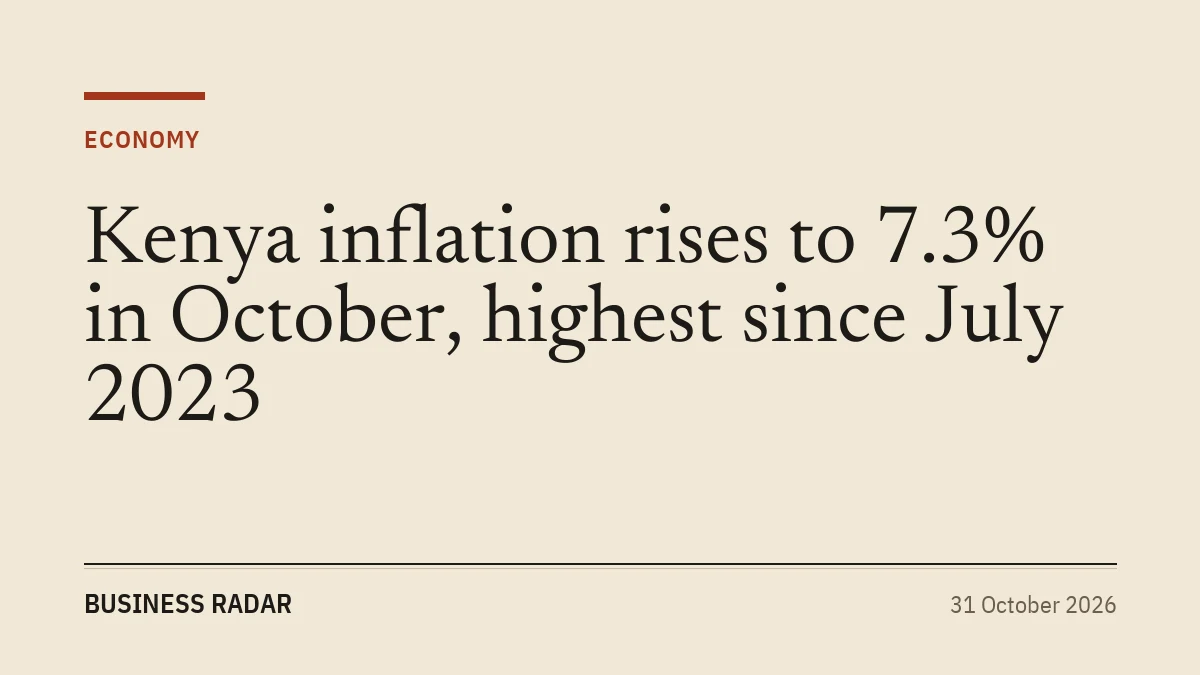
Kenya inflation in October 2026 rose to 7.3%, up from 6.8% in September, according to data released by the Kenya National Bureau of Statistics (KNBS) on Friday, October 30. It is the highest annual rate since July 2023 and leaves prices just 0.2 percentage points below the 7.5% ceiling of the government’s target range.
The jump was driven by fuel and the knock-on effect on transport and food. KNBS said three divisions, which together carry more than 57% of the weight in the Consumer Price Index (CPI) basket, did most of the work:
| CPI division | Annual change to October 2026 |
|---|---|
| Transport | 17.1% |
| Food and non-alcoholic beverages | 10.2% |
| Housing, water, electricity, gas and other fuels | 3.7% |
The overall CPI moved from 156.47 in September to 157.60 in October, a month-on-month rise of 0.7%.
What pushed Kenya inflation up in October 2026?
Fuel is the main story. In the mid-October pricing review the government dropped the fuel subsidy for the first time since August 2025, and pump prices of kerosene, petrol and diesel rose by KSh28.49, KSh12.93 and KSh9.90 a litre respectively, according to the Daily Nation. That happened even though VAT on fuel had been halved to 8% under the tax law President Ruto signed on October 16.
The items with the steepest year-on-year increases, as reported by Citizen Digital from the KNBS release:
- Irish potatoes: up 34.9%
- Diesel: up 32.5%
- Cabbages: up 29.1%
- Petrol: up 22.8%
- City bus and matatu fares: up 18.2%
- Fresh packed cow milk: up 14.4%
- Beef with bone: up 12.5%
- White wheat flour: up 9.1%
- Cooking oil: up 5.1%
Sugar was the main item moving the other way, down 11.1% from October 2025.
Core vs non-core inflation
Non-core inflation, which tracks volatile items such as food, fuel and energy, rose from 14.0% to 15.1%. Core inflation, which strips those out, climbed from 4.0% to 4.3%. The rise in core inflation matters because it suggests higher fuel costs are starting to spread into the wider price of goods and services, not just the pump price.
What it means for businesses and households
For small businesses, transport is the cost line to watch. Delivery, stock runs and staff commuting all get more expensive when matatu fares are up 18%. Firms were already absorbing costs: the CBK’s September CEO survey found two in three firms paid more for inputs, and the Stanbic PMI slipped to 49.7 in September, signalling contraction.
For savers, a 7.3% inflation rate means money in an account paying less than that is losing value in real terms. Compare current yields in our guide to Treasury bills vs Treasury bonds vs infrastructure bonds before locking in.
The reading also puts pressure on the Central Bank of Kenya, which weighs inflation and the exchange rate when it sets the Central Bank Rate. With prices near the top of the target band, a further rate cut looks harder to justify at the next Monetary Policy Committee meeting.
FAQ
What is Kenya’s inflation rate for October 2026?
Annual inflation was 7.3% in October 2026, up from 6.8% in September, according to KNBS.
When was Kenya’s inflation last this high?
July 2023, when annual inflation was also 7.3%.
What is the government’s inflation target?
The target is 5% with a band of 2.5 percentage points either side, so between 2.5% and 7.5%.
Which prices rose the most?
Irish potatoes (34.9%), diesel (32.5%), cabbages (29.1%), petrol (22.8%) and matatu fares (18.2%) had the largest annual increases.
Source: Kenya National Bureau of Statistics CPI release, October 30, 2026, as reported by Citizen Digital, Daily Nation and Reuters. Updated October 31, 2026.
Prefer WhatsApp? Follow Business Radar on WhatsApp
Weekly, free. We only use your email for this newsletter and you can unsubscribe in one click. Privacy policy.

